

Soy: Between Hormonal Fears and Overlooked Benefits | Bona Sanitas
Introduction: The Most Misunderstood Food in the Western World
Few foods generate as much passionate and contradictory debate as soy. In Asia, it has been consumed for millennia and remains a cornerstone of traditional diets, associated with health and longevity. In the Western world, soy arouses deep suspicion and concern: hormone disruptor, feminizing for men, carcinogenic, responsible for environmental destruction.
This paradox is striking. On one side, soy’s virtues are praised: complete plant protein, sustainable alternative to meat, heart-healthy food. On the other, it’s accused of nearly every modern health fear: hormonal imbalances, thyroid problems, threats to male fertility, even links to cancer.
How can one food be simultaneously revered and demonized? The answer lies not in the food itself but in misunderstandings about plant compounds called phytoestrogens, extrapolations from animal studies that don’t apply to humans, and confusion between whole soy foods and highly processed isolates.
This comprehensive guide examines the science behind soy consumption, separating legitimate concerns from unfounded fears, and providing evidence-based recommendations for incorporating soy into a healthy diet. We’ll explore traditional Asian consumption patterns, modern research on hormones and cancer, environmental considerations, and practical guidance on amounts and forms.
For more evidence-based nutrition guidance, explore our healthy recipes collection featuring whole food ingredients including soy-based dishes.

The Asian Paradox: Millennia of Healthy Consumption
A Three-Thousand-Year History
Soy (*Glycine max*) has been cultivated in Asia for over 3,000 years. Archaeological evidence from China dates soybean cultivation to around 1100 BCE. Throughout China, Japan, Korea, and Southeast Asia, soy has been transformed into diverse forms that became integral to daily cuisine:
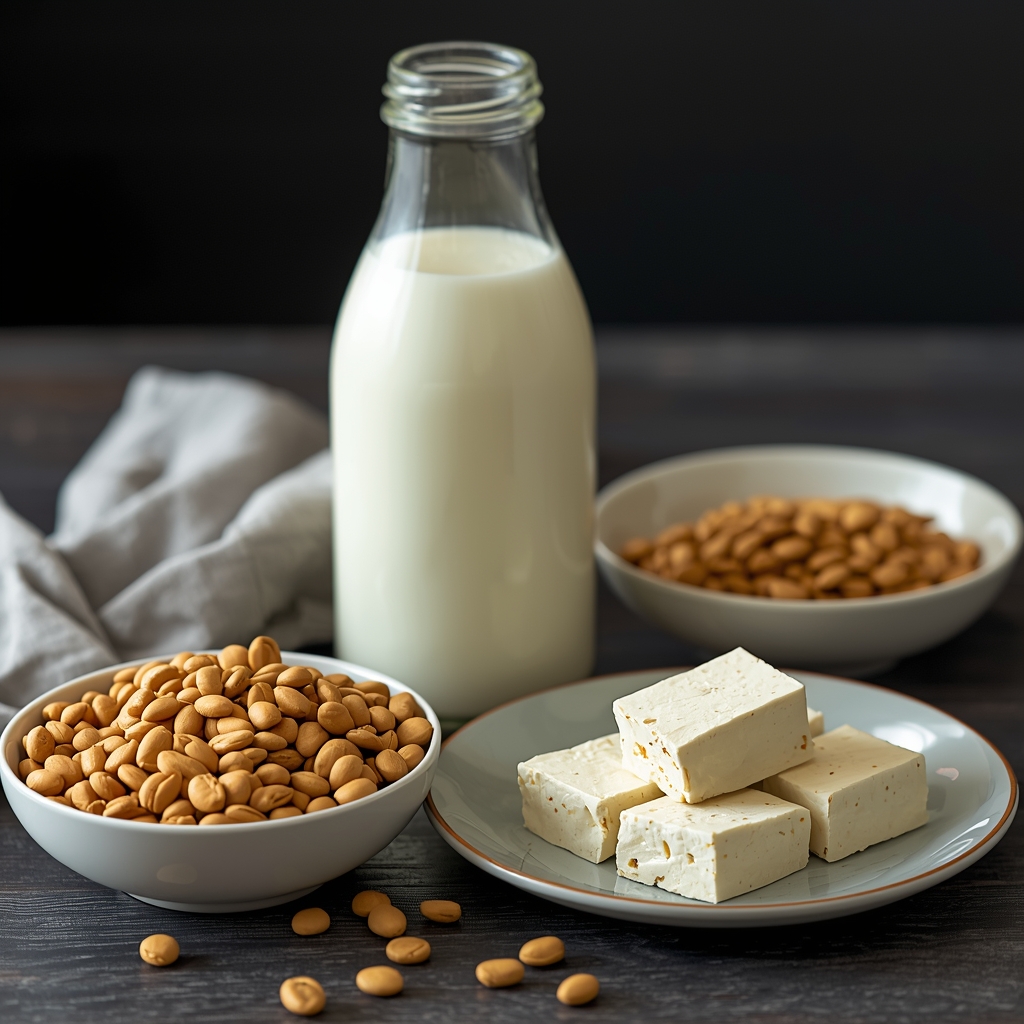
Tofu: Soy curd invented in China around 200 BCE, providing concentrated protein in a digestible form. The process involves coagulating soy milk with calcium or magnesium salts, creating a versatile ingredient that absorbs flavors.
Tempeh: Originating in Indonesia, this fermented soy cake binds cooked soybeans together through beneficial fungal growth. The fermentation process creates vitamin B12 (rare in plant foods), improves digestibility, and produces a firm texture ideal for slicing and grilling.
Miso: This Japanese fermented soy paste, aged from months to years, delivers complex umami flavors along with probiotics and easily absorbed nutrients. Different varieties (white, yellow, red) offer distinct taste profiles and uses.
Natto: Perhaps the most nutritionally remarkable fermented soy, natto contains exceptionally high levels of vitamin K2 (essential for bone and cardiovascular health) plus nattokinase, an enzyme that may support circulation.
Soy sauce: The ubiquitous fermented condiment produced by fermenting soybeans with wheat, salt, and specific mold cultures. Traditional brewing takes months, developing complex flavor compounds.
Edamame: Young soybeans harvested before full maturity, eaten whole in the pod. These provide all the nutrition of mature soybeans in a fresher, sweeter form.
Soy milk: Traditional plant-based beverage made by soaking, grinding, and straining soybeans. Homemade versions contain no additives, just soy and water.
Population Health Observations
Epidemiological studies consistently observe that Asian populations with traditional diets rich in soy show lower rates of many chronic diseases compared to Western populations:
Cardiovascular disease: Japanese men have historically shown cardiovascular mortality rates 50-60% lower than American men, despite similar smoking rates. While multiple dietary factors contribute, soy consumption correlates with this protection.
Hormone-related cancers: Breast cancer incidence in traditional Asian populations is roughly one-third that of Western populations. Prostate cancer follows a similar pattern. When Asian populations migrate to Western countries and adopt Western diets (including reduced soy), their cancer rates rise toward Western levels within one or two generations.
Menopause symptoms: Japanese women report hot flashes at rates far below Western women. Studies suggest 10-25% of Japanese women experience significant hot flashes compared to 70-80% of Western women. Soy consumption appears partially protective.
Bone health: Hip fracture rates in Asian populations consuming traditional diets are significantly lower than in Western populations, despite generally lower calcium intake. Soy’s phytoestrogens may contribute to bone density maintenance.
These observations don’t prove soy alone creates these health differences—Asian diets differ in many ways from Western diets—but they establish that populations consuming substantial amounts of soy for millennia don’t show the harms feared in the West.
Understanding Isoflavones: The Source of Controversy
What Are Isoflavones?
The controversy surrounding soy centers primarily on isoflavones, plant compounds naturally present in soybeans. The two principal isoflavones in soy are genistein and daidzein. These compounds belong to the family of phytoestrogens—plant compounds that can weakly bind to estrogen receptors in the human body.
Soybeans contain roughly 1-3 mg of isoflavones per gram of protein. A typical serving of tofu (100g) provides approximately 20-30 mg of isoflavones. Traditional Asian diets deliver 25-50 mg daily, while Western diets provide less than 5 mg for non-soy consumers.
Critical Distinction: Phytoestrogens Are Not Estrogens
The term “phytoestrogen” creates enormous confusion and irrational fear. Understanding this distinction is crucial: phytoestrogens are NOT estrogens. They’re plant compounds that happen to have a chemical structure similar enough to estrogen that they can bind to estrogen receptors—but with vastly different effects.
Potency difference: Soy isoflavones are 100 to 1,000 times less potent than human estrogens like estradiol. Binding to a receptor doesn’t mean triggering the same response. In fact, when a weak compound binds to a receptor, it often blocks stronger compounds from binding.
Selective modulation: Isoflavones don’t act uniformly across all tissues. They’re selective estrogen receptor modulators (SERMs), meaning they may have estrogenic effects in some tissues (like bone) while having anti-estrogenic or neutral effects in others (like breast tissue). This selectivity is key to understanding their paradoxical protective effects.
Receptor types: The human body has two main estrogen receptor types: ERα and ERβ. Isoflavones preferentially bind ERβ, which tends to oppose some actions of ERα. This selective binding pattern creates tissue-specific effects that differ dramatically from pharmaceutical estrogens or human hormones.
The Paradoxical Protective Action
Isoflavones can have seemingly contradictory effects depending on a person’s hormonal environment:
In low-estrogen contexts (menopause): Isoflavones act as weak estrogens, partially compensating for declining hormones. This explains why soy consumption may reduce hot flashes and support bone density in postmenopausal women. The isoflavones provide gentle estrogenic activity when the body’s own production has decreased.
In high-estrogen contexts (premenopausal women): Isoflavones can have anti-estrogenic effects by occupying estrogen receptors and blocking more potent estrogens. This competitive inhibition may explain protective effects against estrogen-driven cancers.
This context-dependent modulating action represents sophisticated biological regulation, not the simple “more estrogen” effect that many fear.
Myth: Soy Feminizes Men and Reduces Testosterone
Origin of the Myth
Perhaps no soy myth generates more anxiety than the belief that soy feminizes men, reducing testosterone, causing gynecomastia (breast tissue development), and harming fertility. This fear stems from several sources:
Isolated case reports: A handful of published case studies describe men who developed gynecomastia or other symptoms while consuming extreme amounts of soy—often 9-12 servings daily, far exceeding any normal consumption pattern. These extreme cases don’t represent typical use.
Rodent studies: Early studies in rats and mice showed hormonal disruptions from soy. However, rodents metabolize isoflavones very differently than humans. Rats convert daidzein into equol (a more potent metabolite) at rates 10 times higher than most humans. Extrapolating from rodent data to humans is scientifically invalid for isoflavones.
Misunderstanding of “phytoestrogen”: The word itself implies estrogenic effects, creating fear without understanding the biochemical nuances of weak, selective receptor modulation versus strong hormonal activity.
What Rigorous Science Actually Shows
Multiple systematic reviews and meta-analyses have examined soy’s effects on male hormones:
2010 Meta-Analysis (Fertility and Sterility): Researchers analyzed 15 controlled studies examining soy protein and isoflavone effects on male reproductive hormones. The studies included men consuming varying amounts of soy over different time periods. The comprehensive analysis found no significant effects on testosterone levels, estrogen levels, estradiol, sex hormone binding globulin, or any other measured hormone.
2021 Study (Journal of International Society of Sports Nutrition): This study specifically examined male athletes—a population particularly concerned about testosterone—consuming soy protein. Participants showed no reduction in testosterone, no decrease in performance metrics, and no negative impact on muscle mass or strength gains compared to other protein sources.
Sperm quality studies: Reviews of research on soy and male fertility consistently find no adverse effects on sperm concentration, motility, or morphology at normal consumption levels. A 2019 systematic review concluded that typical dietary soy does not impair semen quality.
The Extreme Consumption Cases
The case reports that fueled the feminization myth involved men consuming astronomical amounts—often 12-20 servings daily. One famous case involved a man drinking three quarts of soy milk daily. These extreme intakes bear no resemblance to normal consumption patterns.
For comparison, traditional Asian consumption averages 1-2 servings daily (about 25-50 mg isoflavones). Even vegetarians and vegans who regularly consume soy typically eat 2-4 servings daily. The doses that caused problems were 5-10 times typical consumption.
Scientific Verdict: Myth Thoroughly Debunked
For men consuming normal amounts of soy (1-4 servings daily), there is no credible scientific evidence of feminizing effects, testosterone reduction, or impaired sexual function. The myth persists due to fear-based internet misinformation, not scientific data.
Men can confidently consume moderate amounts of whole soy foods as part of a healthy diet without concern for hormonal effects.
Soy and Breast Cancer: From Fear to Protection
The Original Concern
For years, women with breast cancer or at high risk were advised to avoid soy completely. The reasoning seemed logical: many breast cancers are hormone-receptor-positive, meaning they’re fueled by estrogen. Since soy contains phytoestrogens, surely it would stimulate cancer growth?
This hypothesis was particularly influenced by studies showing that high doses of pure isolated genistein could stimulate breast cancer cell growth in laboratory dishes. However, laboratory conditions don’t replicate the complex biological environment of the human body.
What Population Studies Revealed
When researchers examined actual human populations, they found results completely opposite to the feared effects:
Shanghai Breast Cancer Survival Study (JAMA, 2009): This landmark study followed 5,042 Chinese women diagnosed with breast cancer for four years. Researchers tracked their soy intake and health outcomes. Women consuming the highest amounts of soy (approximately 11g soy protein daily—about one serving) showed a 32% reduction in recurrence risk and a 29% reduction in mortality risk compared to women consuming the least soy.
The protective effect appeared across all tumor types, including hormone-receptor-positive cancers—precisely the type many feared soy would worsen.
After Breast Cancer Pooling Project (Journal of Clinical Oncology, 2017): This massive meta-analysis combined data from multiple studies following over 11,000 breast cancer survivors in both the United States and Asia. The results confirmed: moderate soy consumption (about 10 mg isoflavones daily) was associated with reduced recurrence risk.
Importantly, the protective effect was observed in both Asian and Western populations, suggesting it’s not simply a genetic difference but a real effect of soy consumption.
Adolescent and young adult consumption: Studies examining soy intake during adolescence and young adulthood found even stronger protective effects. Women who consumed soy regularly during adolescence showed up to 50% reduced breast cancer risk later in life. This suggests that early exposure may be particularly beneficial, possibly by influencing breast tissue development.
Mechanisms of Protection
How can soy containing phytoestrogens actually protect against estrogen-driven cancers? Multiple mechanisms appear to work together:
Competitive receptor blocking: Isoflavones bind estrogen receptors but trigger much weaker responses than human estrogens. By occupying these receptors, they prevent more potent estrogens from binding and stimulating cell proliferation. Think of it as parking a compact car in a space to prevent a large truck from parking there.
Aromatase inhibition: Genistein can inhibit aromatase, the enzyme that converts androgens to estrogen in fat tissue. Less local estrogen production may reduce cancer cell stimulation.
Anti-angiogenic effects: Isoflavones can inhibit the formation of new blood vessels (angiogenesis) that tumors need to grow and spread. Without adequate blood supply, tumor growth is constrained.
Apoptosis induction: Isoflavones can trigger programmed cell death (apoptosis) in cancer cells while leaving normal cells unaffected. This selective toxicity helps eliminate abnormal cells.
Antioxidant properties: Isoflavones protect against oxidative damage to DNA, potentially preventing the mutations that initiate cancer.
Cell cycle regulation: Genistein affects proteins that control cell division, potentially slowing the proliferation of cancer cells.
Current Medical Recommendations
Major cancer organizations have updated their guidance based on accumulating evidence:
American Cancer Society: “Breast cancer survivors can safely consume moderate amounts of soy foods.”
American Institute for Cancer Research: “Up to three servings of soy foods per day are safe and potentially protective for breast cancer survivors.”
Canadian Cancer Society: “Women with breast cancer can eat soy foods.”
These recommendations specify whole soy foods (tofu, tempeh, edamame, soy milk) rather than concentrated isoflavone supplements, which deliver much higher doses and lack the complete nutritional profile of whole foods.
Soy and Bone Health: Supporting Skeletal Strength
Beyond cancer prevention, soy offers significant benefits for bone health, particularly important for postmenopausal women who face accelerated bone loss.
The Evidence
Multiple studies and meta-analyses have examined soy’s effects on bone density:
Nutrients Meta-Analysis (2016): Researchers pooled data from 15 randomized controlled trials examining isoflavone supplementation in menopausal women. The analysis found significant improvements in bone mineral density, particularly in the lumbar spine. Women taking isoflavone supplements showed less bone loss than placebo groups.
Osteoporosis International Study (2013): This research specifically examined the relationship between dietary soy intake and hip fracture risk in Asian populations. Higher soy consumption was associated with reduced fracture risk, especially in women more than 10 years past menopause.
Effect size: While the bone density improvements from soy are modest (2-3% increase), this magnitude of change is clinically meaningful for fracture risk, potentially reducing risk by 20-30% over time.
Mechanisms Supporting Bone Health
Isoflavones support bone health through several pathways:
Weak estrogenic activity: After menopause, estrogen levels drop dramatically, accelerating bone loss. Isoflavones’ weak estrogenic effects partially compensate, slowing the rate of bone resorption (breakdown).
Osteoblast stimulation: Isoflavones can directly stimulate osteoblasts, the cells responsible for building new bone tissue.
Osteoclast inhibition: They may also inhibit osteoclasts, the cells that break down bone tissue, shifting the balance toward bone building rather than breakdown.
Calcium absorption: Some research suggests isoflavones may enhance calcium absorption or reduce calcium excretion, though this mechanism requires more study.
Tofu prepared with calcium salts (calcium sulfate or calcium chloride) provides additional benefits, delivering both isoflavones and highly bioavailable calcium in a single food.
Cardiovascular Benefits: Heart-Healthy Protein
The FDA approved a health claim in 1999 stating that 25 grams of soy protein daily (part of a diet low in saturated fat and cholesterol) may reduce heart disease risk. While this specific claim was later qualified, the cardiovascular benefits of soy remain supported by substantial evidence.
Cholesterol and Lipid Effects
Multiple meta-analyses confirm that soy protein consumption:
Reduces LDL cholesterol: Typically by 3-6%, with larger effects in people with high baseline cholesterol. While modest, this reduction is clinically meaningful for cardiovascular risk.
Improves cholesterol ratios: Soy tends to maintain or slightly increase HDL (“good” cholesterol) while lowering LDL (“bad” cholesterol), improving the total cholesterol to HDL ratio.
Reduces triglycerides: Some studies show modest triglyceride reductions, particularly in people with elevated levels.
The cholesterol-lowering effect appears to result from soy protein itself rather than isoflavones alone. Mechanisms include increased bile acid excretion, improved LDL receptor activity in the liver, and beneficial changes in lipoprotein metabolism.
Beyond Cholesterol
Soy offers additional cardiovascular benefits:
Arterial flexibility: Isoflavones may improve endothelial function (the ability of blood vessels to dilate and contract appropriately), which deteriorates in atherosclerosis.
Blood pressure: Some studies suggest modest blood pressure reductions with regular soy consumption, particularly in people with elevated pressure.
Inflammation markers: Soy may reduce C-reactive protein and other inflammatory markers associated with cardiovascular disease.
Replacing harmful fats: When soy replaces red meat and full-fat dairy in the diet, it eliminates significant amounts of saturated fat and cholesterol, indirectly benefiting heart health.
Nutrient profile: Soy foods provide fiber, polyunsaturated fats (including some omega-3s in certain forms), and zero cholesterol, creating a heart-friendly nutritional package.
Legitimate Concerns: When Caution Is Warranted
Thyroid Function
Soy contains compounds called goitrogens that can interfere with thyroid hormone synthesis by affecting iodine metabolism. This represents a legitimate area of concern, though not for most people.
The evidence: In people with normal thyroid function and adequate iodine intake, moderate soy consumption doesn’t typically cause thyroid problems. However, people with hypothyroidism, borderline thyroid function, or iodine deficiency may be more vulnerable.
Mechanism: Isoflavones can inhibit thyroid peroxidase, an enzyme essential for thyroid hormone production. They may also interfere with iodine absorption in the digestive tract.
Recommendations:
- People with normal thyroid function: No restrictions on moderate soy consumption (1-3 servings daily)
- People with hypothyroidism: Can consume soy but should ensure adequate iodine intake (150 mcg daily from iodized salt, seaweed, dairy, or supplements)
- People taking thyroid medication: Space soy consumption at least 4 hours away from thyroid medication, as soy can reduce medication absorption
- Monitor thyroid function: If you have thyroid issues and increase soy intake substantially, have thyroid levels checked after a few months
Soy Allergies
Soy allergy ranks among the most common food allergies, particularly in infants and young children. Fortunately, most children (50-70%) outgrow soy allergy by adolescence.
Symptoms range from mild (hives, itching) to severe (anaphylaxis, though this is rare). People with confirmed soy allergy must avoid all soy-containing products.
Cross-reactivity: People allergic to other legumes (peanuts, lentils) may have increased soy allergy risk, though cross-reactivity is not automatic.
If you suspect soy allergy, proper testing (skin prick test or specific IgE blood test) can confirm or rule it out.
Infant Formula Considerations
Soy-based infant formulas remain controversial. These formulas deliver much higher isoflavone exposure (relative to body weight) than adults consuming soy would experience.
Concerns:
- High isoflavone exposure during critical developmental windows
- Lack of long-term studies on developmental outcomes
- Phytate content may reduce mineral absorption
- Missing nutrients present in breast milk or cow’s milk formulas
Recommendations:
- Breastfeeding remains the gold standard when possible
- Cow’s milk-based formula is the standard alternative
- Soy formula is appropriate for specific situations: documented cow’s milk protein allergy, galactosemia, lactose intolerance, or philosophical choice by vegan families
- Always consult a pediatrician before choosing soy formula
Despite theoretical concerns, large follow-up studies of adults who consumed soy formula as infants haven’t found significant health differences compared to those fed cow’s milk formula.
Fermented Versus Unfermented Soy
Traditional fermented soy foods (tempeh, miso, natto, fermented tofu) offer advantages over unfermented forms:
Improved digestibility: Fermentation breaks down complex proteins and carbohydrates, making nutrients more accessible and reducing digestive discomfort.
Reduced anti-nutrients: Fermentation decreases phytates (which bind minerals), trypsin inhibitors (which interfere with protein digestion), and oligosaccharides (which cause gas).
Probiotic benefits: Fermented soy contains beneficial bacteria that support gut health and immune function.
Increased bioavailability: Vitamins and minerals are more easily absorbed from fermented soy. Fermentation also creates vitamin K2 (in natto) not present in unfermented soy.
Lower isoflavone content: Paradoxically, fermentation often reduces total isoflavone content while converting them to more bioactive forms. This may optimize the benefit-to-dose ratio.
While unfermented soy foods (tofu, edamame, soy milk) are perfectly healthy, incorporating fermented varieties adds diversity and potential benefits.
Environmental Considerations: Separating Facts from Fiction
The Deforestation Question
Soy is frequently blamed for Amazon deforestation. This accusation requires crucial context and nuance.
The critical fact: Approximately 77% of global soy production goes to animal feed—primarily for chickens, pigs, farmed fish, and cattle. Only 7% is directly processed for human consumption (tofu, soy milk, tempeh, etc.). The remaining 16% goes to soy oil for human use and industrial applications like biodiesel.
The reality: The primary driver of soy-related deforestation is industrial animal agriculture, not direct human consumption. When forests are cleared for soy fields, the vast majority of that soy becomes animal feed. Eating a tofu burger causes far less soy-related deforestation than eating a beef burger (the cow was fed soy, plus required additional land for grazing).
Geographic patterns: Deforestation for soy is concentrated in South America (Brazil, Argentina, Paraguay). Most soy for direct human consumption in North America and Europe comes from North American farms, not deforested Amazon land.
Comparative Environmental Impact
When comparing protein sources, soy for direct human consumption shows significant environmental advantages:
Land use: Producing one kilogram of soy protein requires approximately 2 hectares of land. Producing one kilogram of beef protein requires 20-30 hectares. The efficiency difference is dramatic.
Water consumption: Soy requires about 2,000 liters of water per kilogram of protein. Beef requires 15,000 liters. Chicken and pork fall between but still exceed soy.
Greenhouse gas emissions: Soy production generates approximately 2 kg CO₂-equivalent per kg protein. Beef generates 50-100 kg CO₂-equivalent per kg protein, accounting for methane from cattle and land use changes.
Energy efficiency: Converting plant protein (soy) to animal protein (meat) inherently wastes energy. Animals typically convert only 10% of feed protein into body protein. Eating soy directly is far more efficient.
The environmental argument against soy consumption doesn’t hold up to scrutiny. Soy-based protein is among the most sustainable protein sources available, especially when sourced from regions not associated with deforestation.
For sustainable eating ideas, explore our healthy recipes incorporating plant-based proteins.
Whole Soy Foods Versus Processed Isolates
Not all soy products are created equal. The health effects can differ substantially based on processing:
Whole soy foods (recommended): Edamame, tofu, tempeh, whole soybeans, minimally processed soy milk. These retain the complete nutritional package: protein, fiber, isoflavones, vitamins, minerals, and other beneficial compounds in their natural ratios. Processing is minimal—soaking, grinding, coagulating, or fermenting.
Isolated soy protein (use moderately): Protein powders, many meat alternatives, protein bars. These are highly processed, often containing just the protein fraction with little fiber and potentially altered isoflavone content. They may include additives, sugars, salt, and refined oils. While not inherently harmful, they lack the holistic benefits of whole soy foods.
Ultra-processed soy products (limit): Many commercial fake meats, vegan cheeses, and highly processed foods that happen to contain soy. These often bear little resemblance to whole soybeans and may contain long ingredient lists of additives, stabilizers, flavoring agents, and refined oils. They can be useful convenience foods but shouldn’t form the foundation of soy intake.
General principle: The closer a food is to its whole, natural form, the better. A block of plain tofu is superior to heavily processed soy nuggets, just as an apple is superior to apple-flavored candy.
Practical Guidance: How Much Soy Should You Eat?
Traditional Asian Consumption Patterns
Asian populations that show health benefits from soy typically consume:
- 1 to 2 servings of whole soy foods daily
- Approximately 25 to 50 mg of isoflavones per day
- Varied forms throughout the week (tofu several days, miso soup, edamame, occasional tempeh)
- Primarily whole and fermented forms rather than isolated proteins
This pattern represents moderate, consistent consumption integrated into an overall healthy dietary pattern rich in vegetables, fish, whole grains, and tea.
Recommendations for Westerners
For most healthy adults without specific contraindications:
General population: 1 to 3 servings of whole soy foods daily are safe and potentially beneficial. This translates to approximately 25-75 mg isoflavones.
One serving equals:
- 1 cup (240ml) unsweetened soy milk
- 1/2 cup (100g) tofu
- 1/2 cup (100g) cooked edamame
- 1/4 cup (60g) tempeh
- 1/3 cup (75g) cooked soybeans
Variety matters: Rather than eating the same soy food daily, rotate among different forms to get diverse nutrients and preparation methods.
Specific Population Considerations
Pregnant and breastfeeding women: 1-2 servings of whole soy foods daily are generally considered safe and provide high-quality protein. Avoid concentrated isoflavone supplements.
Breast cancer survivors: Up to 3 servings of whole soy foods daily are considered safe and potentially protective based on current evidence. Avoid high-dose isoflavone supplements.
Men: No special restrictions. Normal consumption (1-4 servings daily) doesn’t affect testosterone or sexual function.
People with hypothyroidism: Can consume 1-2 servings daily but should ensure adequate iodine intake (150 mcg/day) and space soy consumption away from thyroid medication.
Children: Moderate amounts as part of a varied diet are fine. Soy can be a valuable protein source for vegetarian children. Avoid reliance on soy formula without medical indication.
Athletes and highly active individuals: Can consume higher amounts (3-5 servings) as a protein source without concern. Soy protein supports muscle building comparably to animal proteins when consumed in adequate amounts.
Frequently Asked Questions
Does soy reduce testosterone in men?
No. Multiple systematic reviews and meta-analyses show no effect of moderate soy consumption (1-4 servings daily) on testosterone levels, estrogen levels, or sexual function in men. The feminization myth is not supported by human studies.
Should breast cancer survivors avoid soy?
No. Current evidence from large population studies shows that moderate soy consumption (up to 3 servings daily of whole soy foods) is safe and may actually reduce recurrence risk. Major cancer organizations have updated their guidance to reflect this evidence.
Is soy bad for thyroid function?
For people with normal thyroid function and adequate iodine intake, moderate soy consumption doesn’t cause thyroid problems. People with hypothyroidism should ensure adequate iodine and may want to space soy away from thyroid medication, but needn’t avoid soy entirely.
Is organic soy worth the extra cost?
Over 90% of conventional soy is genetically modified (GM). While current evidence suggests GM soy is safe, choosing organic guarantees non-GM soy and typically means less pesticide exposure. It’s a personal choice based on your values and budget.
Can children safely eat soy?
Yes. Children can safely consume moderate amounts of whole soy foods as part of a varied diet. Soy can be particularly valuable for vegetarian children as a complete protein source. Soy formula for infants should be used only when medically appropriate or as a philosophical choice by vegan families.
Is fermented soy healthier than unfermented?
Fermented soy (tempeh, miso, natto) offers additional benefits: improved digestibility, reduced anti-nutrients, probiotic content, and enhanced nutrient bioavailability. However, unfermented soy (tofu, edamame) is also perfectly healthy. Including both types provides variety.
Does soy cause deforestation?
The vast majority (77%) of soy-related deforestation is driven by soy grown for animal feed, not human consumption. Eating soy directly causes far less environmental impact than eating animals fed soy. Choose soy products from regions not associated with deforestation when possible.
How does soy compare to other plant proteins?
Soy is one of the few plant proteins that provides all essential amino acids in adequate proportions, making it “complete” like animal proteins. This completeness, combined with high digestibility, makes soy superior to most other plant proteins for meeting protein needs.

Conclusion: Embracing Soy Based on Science, Not Fear
Soy stands as one of the most extensively researched and unjustly demonized foods in the modern Western diet. The scientific evidence, when examined comprehensively rather than selectively, paints a clear picture: moderate consumption of whole soy foods is safe for nearly everyone and potentially beneficial for many aspects of health.
What the evidence clearly establishes:
Soy does not feminize men. Decades of research on thousands of participants demonstrate no effects on testosterone, fertility, or sexual function at normal consumption levels.
Soy does not cause breast cancer. In fact, accumulating evidence suggests it may be protective, reducing both initial cancer risk and recurrence risk in survivors. This protection extends even to hormone-receptor-positive cancers.
Soy offers genuine health benefits including high-quality complete protein, cardiovascular benefits through cholesterol reduction, bone health support in postmenopausal women, and potential protective effects against certain cancers.
Concerns about soy are not entirely unfounded but are specific rather than universal: people with thyroid dysfunction should monitor their iodine intake, those with soy allergy must avoid it, and soy formula for infants should be reserved for appropriate situations.
Environmental concerns about soy are better directed at industrial animal agriculture (which consumes 77% of soy production) than at direct human consumption. Eating soy foods is environmentally preferable to eating animals fed soy.
Form matters significantly. Whole and fermented soy foods offer maximum benefits. Highly processed soy protein isolates and ultra-processed fake meats should be consumed more sparingly.
The ideal approach for most people involves incorporating 1-3 servings of whole soy foods into a varied, nutrient-dense diet. This mirrors successful traditional Asian dietary patterns while avoiding excessive reliance on any single food.
Soy is neither a miraculous superfood that will solve all health problems nor a toxic hormone disruptor to be feared. It’s simply a nutritious legume that, when consumed in whole food forms and reasonable amounts, can contribute to a healthy, sustainable diet.
Rather than basing decisions on internet myths, fear-mongering, or outdated information, let current scientific evidence guide your choices. If you enjoy soy foods, tolerate them well, and appreciate their environmental advantages, include them confidently in your diet. If you prefer other protein sources, that’s perfectly fine too—dietary diversity and personal preference matter.
The goal is informed choice based on accurate information, not fear-based avoidance based on misunderstanding. With soy, as with all nutrition topics, science should triumph over sensationalism.
For information about soy and the risk of breast cancer (Mayo Clinic)
For more evidence-based nutrition guidance and healthy recipes, explore our complete collection of nutritious meal ideas designed to support your wellbeing with delicious, sustainable food choices.