
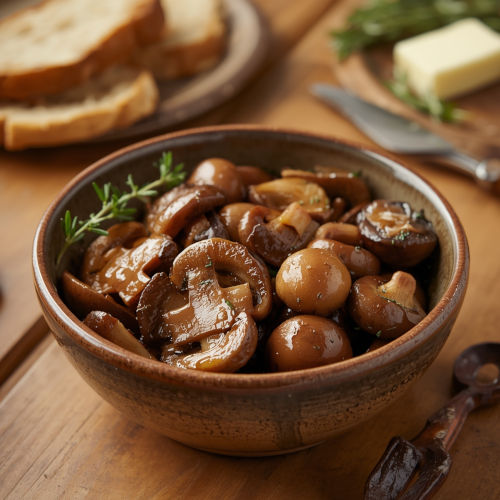
Sautéed Mushrooms with Thyme & Apple Cider Vinegar | Thanksgiving side dish | Bona Sanitas
Sautéed Mushrooms with Thyme and Apple Cider Vinegar
Mushrooms have a quiet, understated magic in the kitchen. They bring meaty texture without meat, deep umami without heaviness, and a natural earthiness that anchors a dish and makes it feel grounded and complete. This recipe for sautéed mushrooms with thyme and apple cider vinegar is one of those deceptively simple preparations that punches far above its ingredient count — fifteen to twenty minutes from start to finish, a handful of pantry staples, and the result is a savory, bright, deeply satisfying side dish that works at a Thanksgiving table as easily as it does on a Tuesday evening.
This recipe is part of our healthy recipes collection, which favors dishes that are nutritionally substantive, genuinely flavorful, and practical enough for real weekday cooking. Sautéed mushrooms check all three boxes. They are low in calories but rich in B vitamins, selenium, and prebiotic fiber compounds. They cook quickly at high heat, developing a golden, caramelized crust that concentrates their savory depth. And the finishing addition of apple cider vinegar lifts the entire dish, cutting through richness and adding a bright, tangy contrast that makes every bite interesting.
The result is a side dish with what chefs sometimes describe as full flavor architecture: savory from the mushrooms and garlic, herbaceous from the fresh thyme, rich from the olive oil, and bright from the vinegar. Each element earns its place, and nothing feels extraneous or forced.
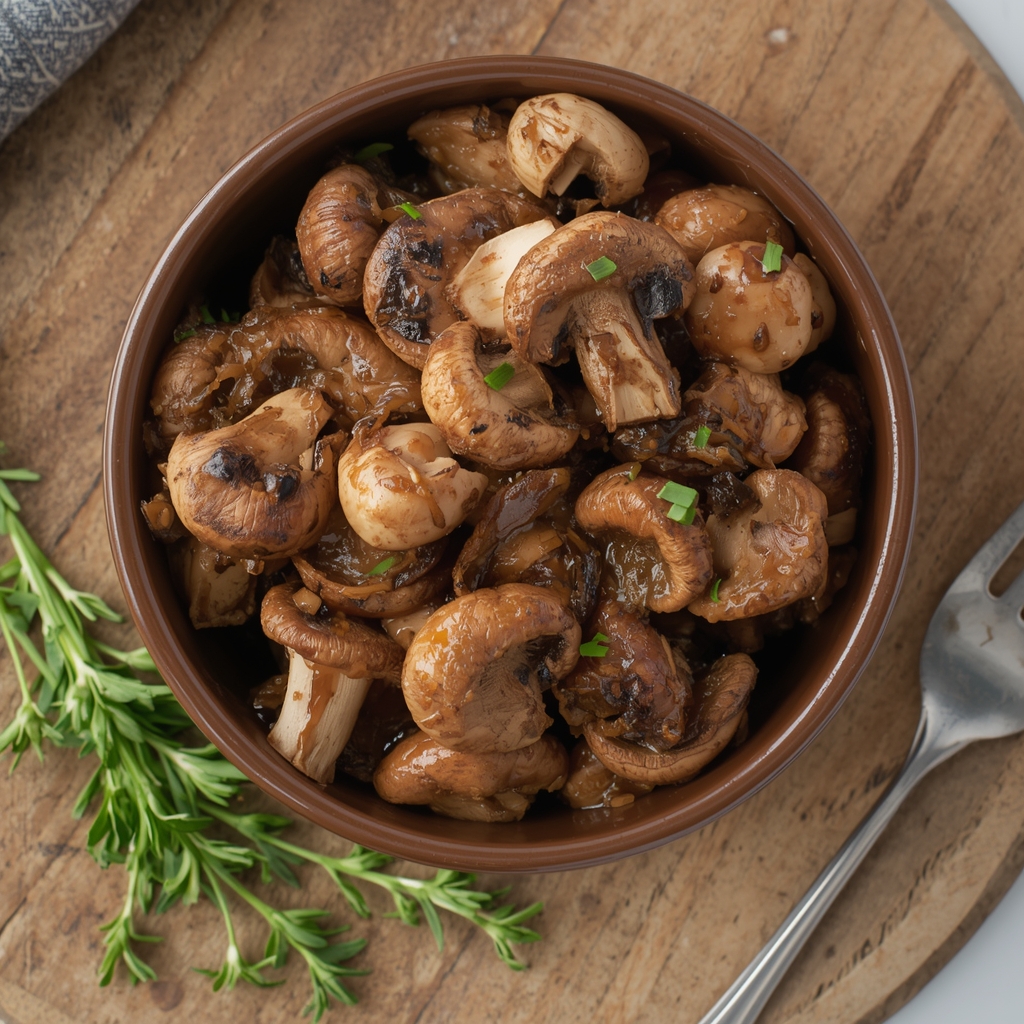
This guide covers the nutritional science behind mushrooms and apple cider vinegar, the technique behind getting a proper golden sear rather than a steamed, grey result, detailed preparation instructions, and a thorough set of variations and serving suggestions for everything from a simple weeknight side to an elegant holiday spread.
The Nutritional Case for Mushrooms
Mushrooms occupy a genuinely unique position in the plant kingdom — they are fungi, not vegetables, and their nutritional profile reflects that distinction. They contain compounds and nutrients found in few or no other plant-based foods, making them one of the most nutritionally interesting ingredients in a wellness-oriented kitchen.
The B vitamin content of mushrooms is particularly notable. They are one of the best plant-based sources of riboflavin (B2), niacin (B3), and pantothenic acid (B5) — vitamins that play essential roles in energy metabolism, converting food into usable cellular energy. They also contain meaningful amounts of folate (B9) and small amounts of B12 in certain sun-exposed varieties, making them relevant for those following plant-based diets where B vitamins can be harder to obtain in adequate quantities. Research from institutions including the Harvard T.H. Chan School of Public Health highlights mushrooms as a nutritionally underappreciated food that deserves more attention in health-conscious eating.
Selenium is another standout micronutrient in mushrooms. This trace mineral acts as a cofactor for several antioxidant enzymes in the body, supporting immune function and protecting cells from oxidative damage. Selenium is not abundant in most plant foods, making mushrooms a genuinely valuable source for those eating plant-forward diets.
Mushrooms also contain beta-glucans — a class of soluble, prebiotic fiber that feeds beneficial gut bacteria and has been associated in clinical research with improved immune response, reduced LDL cholesterol levels, and better blood sugar regulation after meals. These are the same beta-glucans found in oats, though the specific structures differ slightly. The prebiotic effect of mushroom beta-glucans makes them particularly valuable for gut microbiome diversity, which is increasingly recognized as central to overall health.
Finally, mushrooms exposed to sunlight or UV light produce vitamin D2, making them one of the very few non-animal food sources of vitamin D. Some commercially available mushrooms are specifically UV-treated to boost their vitamin D content. For those with limited sun exposure — a real concern in northern latitudes during the short winter days around Thanksgiving — this is a meaningful consideration.
Apple Cider Vinegar: The Ingredient That Transforms the Dish
The two teaspoons of apple cider vinegar in this recipe do more work per milliliter than almost any other ingredient. Understanding what they contribute helps explain why this step is non-negotiable rather than optional.
First, acid brightens flavor. The natural umami depth of sautéed mushrooms is genuinely wonderful, but without a contrasting element it can feel flat or one-dimensional after the first few bites. The acidity of apple cider vinegar creates a flavor contrast that makes the savory notes of the mushrooms seem more vivid and the herbal notes of the thyme more distinct. This is the same principle behind adding a squeeze of lemon to a rich sauce or a splash of vinegar to a braised dish — acid lifts and defines.
Second, the vinegar deglazes the pan. When it hits the hot surface, it dissolves the caramelized, browned bits stuck to the bottom — the fond, in cooking terminology — and incorporates them into the dish. These browned bits contain concentrated umami and Maillard reaction compounds that represent some of the most flavorful material in the pan. The vinegar effectively rescues that flavor and distributes it throughout the mushrooms.
Third, apple cider vinegar itself contains acetic acid and trace amounts of beneficial compounds from the fermentation process. While the quantities in a typical serving of this dish are modest, the broad evidence around apple cider vinegar’s role in supporting digestive comfort and modest post-meal blood sugar moderation is increasingly well-documented. Our wellness practices collection covers fermented foods and vinegars as part of a broader approach to digestive wellness.
Understanding the Mushroom Sear: Why Technique Matters
The single biggest variable between a mediocre mushroom dish and an exceptional one is technique — specifically, the searing step. Mushrooms contain approximately 90–92% water by weight. When that water escapes during cooking, two very different things can happen depending on how you manage the heat.
In a properly hot pan with sufficient space, the released water evaporates quickly and the mushroom surface makes direct contact with the hot pan surface, producing the Maillard reaction — the complex browning process that creates hundreds of new flavor compounds and the deeply caramelized, golden-brown color that makes sautéed mushrooms so appealing. In an overcrowded pan or one that is not hot enough, the water cannot evaporate fast enough, the mushrooms sit in their own liquid, and they steam rather than sear — producing pale, rubbery, flavorless results.
The practical implications of this are straightforward. Use a large, wide skillet — stainless steel or cast iron both work excellently, non-stick less so because it does not get hot enough. Make sure the pan is fully preheated before adding oil. Add the mushrooms in a single layer and, if your skillet is not large enough to accommodate all 800g at once, cook them in two batches rather than crowding. And resist the urge to stir constantly — let them sit undisturbed for two to three minutes before turning, allowing a genuine sear to develop on the contact surface.
Patting the mushrooms dry before cooking is equally important. Any surface moisture will cause spitting when they hit the hot oil and will delay the searing process. A few seconds with a clean kitchen towel makes a meaningful difference to the final result.
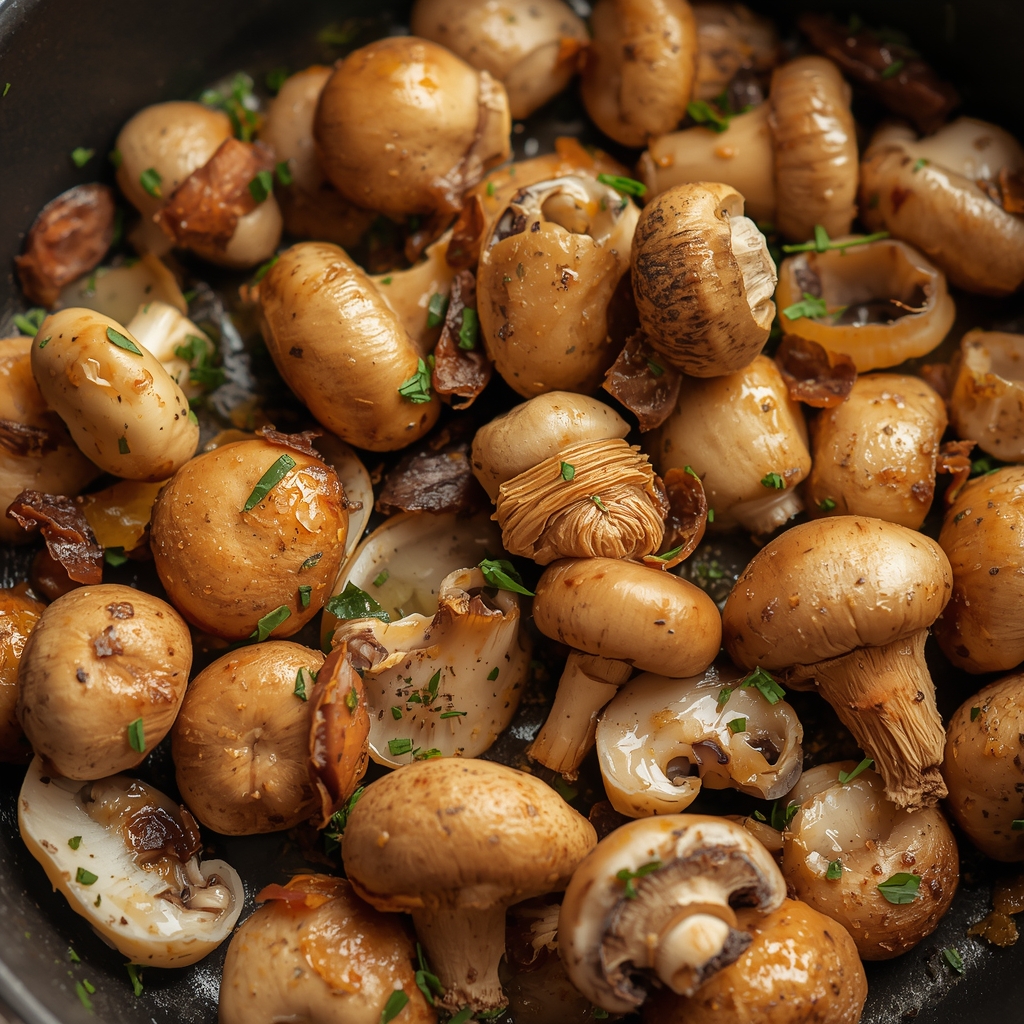
Ingredients
For 4 servings:
- 800g (approximately 1.75 lbs) mixed mushrooms — cremini, shiitake, oyster, or a combination; trimmed and halved or thickly sliced depending on size
- 2 tablespoons olive oil, or 1 tablespoon butter + 1 tablespoon olive oil for a richer result
- 3 garlic cloves, thinly sliced or minced
- 1 tablespoon fresh thyme leaves (stripped from the stems), or 1 teaspoon dried thyme
- 2 teaspoons apple cider vinegar, plus extra to taste if desired
- Salt and freshly ground black pepper, to taste
- Optional: 1 small pinch of chili flakes for gentle heat
- Optional: 1 teaspoon soy sauce or tamari for additional umami depth
- Fresh flat-leaf parsley, roughly chopped, for finishing
Preparation
Step-by-step instructions:
- Prepare the mushrooms: Clean the mushrooms by wiping them with a damp cloth or brushing away any dirt — do not submerge them in water, as they absorb moisture readily and will steam rather than sear. Trim the stems as needed. Halve or thickly slice larger mushrooms; leave small ones whole. Pat all surfaces dry with a clean kitchen towel.
- Heat the pan: Place a large, wide skillet — stainless steel or cast iron preferred — over medium-high heat. Allow the pan to fully preheat for 2–3 minutes. The pan is ready when a drop of water flicked onto the surface evaporates almost instantly.
- Add oil and begin the sear: Add the olive oil (and butter, if using). When the oil shimmers and the butter foam subsides, add the mushrooms in a single layer. If your pan cannot accommodate all the mushrooms at once without overlapping, cook in two separate batches — this step is critical and worth the extra few minutes.
- Sear undisturbed: Let the mushrooms cook without stirring for 2–3 minutes. Resist the temptation to move them — they need direct, sustained contact with the hot pan surface to develop the golden-brown crust that creates their deep flavor. After 2–3 minutes, stir or flip them and let the second side brown for another 2 minutes.
- Add garlic and thyme: Reduce the heat slightly to medium. Add the sliced garlic and fresh thyme leaves. Stir continuously for 1–2 minutes until the garlic turns pale golden and fragrant. Watch carefully — garlic burns quickly at this stage and bitter, burnt garlic will compromise the entire dish.
- Deglaze with apple cider vinegar: Add the apple cider vinegar directly to the pan. It will sizzle vigorously and release steam. Use a wooden spoon or spatula to scrape up all the browned bits from the bottom of the pan — this is the fond, and it carries concentrated flavor. Stir to coat the mushrooms in the glossy, slightly reduced vinegar glaze.
- Season and adjust: Season generously with salt and freshly ground black pepper. If desired, add a splash of soy sauce or tamari for deeper umami, or a pinch of chili flakes for warmth. Taste and adjust — if the dish seems too rich, a few extra drops of apple cider vinegar will brighten it; if it seems too sharp, a small pinch of sugar will balance.
- Finish and serve: Transfer to a warm serving dish or plates. Scatter freshly chopped flat-leaf parsley over the top. Serve immediately — sautéed mushrooms are at their best within a few minutes of cooking, while the crust is still crisp and the herbs are fragrant.
Total time: 20 minutes
Nutritional Profile and Health Benefits
One serving of this recipe (approximately 200g of cooked mushrooms with olive oil) provides around 110–130 calories, depending on whether butter is included. The macronutrient profile is modest — primarily fat from the olive oil, with small amounts of protein and carbohydrate from the mushrooms themselves. The real nutritional value lies in the micronutrients and functional compounds.
Each serving contributes meaningful amounts of riboflavin, niacin, and pantothenic acid (B vitamins supporting energy metabolism), selenium (antioxidant cofactor and immune support), potassium (cardiovascular and fluid balance), and copper (connective tissue formation and iron metabolism). The mushroom beta-glucans contribute prebiotic fiber that feeds beneficial gut bacteria, and the olive oil provides monounsaturated fatty acids that support cardiovascular health and anti-inflammatory pathways.
At 110–130 calories for a generous, deeply satisfying serving, this dish delivers exceptional nutritional value relative to its caloric cost. It adds real substance and umami depth to a meal without adding starchy carbohydrates, refined ingredients, or excessive saturated fat. For those building a Thanksgiving table that balances indulgence with nutrition, it represents exactly the kind of side dish that earns its place on the plate.
Mushroom Varieties: What to Choose and Why
The recipe calls for 800g of mixed mushrooms, and the choice of varieties significantly influences the final flavor and texture of the dish. Here is a guide to the most commonly available options and what each contributes:
Cremini mushrooms (also called baby bella or brown mushrooms) are the workhorse of this recipe. They have a firm texture that holds up well to high-heat searing, a mild but genuine earthiness, and they develop a beautiful golden color when properly sautéed. They are widely available year-round and economical enough to use as the primary component of an 800g mix.
Shiitake mushrooms add the most pronounced umami depth of any commonly available variety. Their caps have an intensely savory, almost meaty quality when seared. The stems are woody and should be removed and reserved for stock rather than eaten directly. A quarter to a third of the mushroom mix as shiitake creates a noticeable umami elevation in the finished dish.
Oyster mushrooms bring a different textural dimension — their broad, fan-shaped caps have a more delicate, slightly silky texture and a milder, subtler flavor than cremini or shiitake. They tear beautifully along their natural grain and add visual interest to the dish. Their lower water content means they sear particularly quickly.
Portobello mushrooms, sliced into thick strips, add substantial meatiness and are especially satisfying for those building a plant-forward main course around this dish. Their large caps and dense flesh produce particularly impressive browning.
A mix of two or three varieties produces a more texturally and flavor-complex result than any single variety alone. The interplay between firm cremini, meaty shiitake, and delicate oyster creates a dish that feels genuinely sophisticated despite its simplicity.
Serving Suggestions: From Thanksgiving Table to Weeknight Bowl
One of the great virtues of this recipe is its versatility. It functions equally well as a formal holiday side dish and as a casual weeknight component, adapting to whatever surrounds it on the plate.
As a Thanksgiving side dish, it provides a savory, umami-rich counterpoint to the sweeter sides that typically dominate the table — sweet potato, cranberry sauce, squash dishes. Its brightness from the vinegar and herbaceous quality from the thyme make it a palate-cleansing presence among richer dishes. Serve it in a warm ceramic bowl with a generous scattering of fresh parsley and an extra drizzle of good olive oil.
Spooned over creamy polenta or soft, buttery mashed potatoes, it creates a complete and deeply satisfying vegetarian main course. The mushrooms’ savory liquid mingles with the creamy base to create something greater than the sum of its parts. This combination — mushrooms on polenta — is a particularly elegant vegetarian option for Thanksgiving guests who do not eat turkey.
Tossed with freshly cooked whole-grain pasta, a splash of the pasta cooking water, and a handful of grated Parmesan or nutritional yeast, these mushrooms become the basis of a fifteen-minute pasta dinner that tastes restaurant-worthy. Piled onto thick sourdough toast with a smear of ricotta, goat cheese, or hummus, they make a lunch or light supper that is satisfying without being heavy. Added to grain bowls alongside roasted vegetables, a leafy green, and a tahini dressing, they bring the umami backbone that holds the whole bowl together. For more inspiration on building balanced, nutrient-dense meals, explore our collection of wellness practices and our full recipes archive.

Variations and Customizations
This recipe is designed as a versatile base. Here are the most useful adaptations:
Fully vegan version: Use only olive oil — no butter. Add 1 tablespoon of nutritional yeast when you add the vinegar, stirring it in to create a cheesy, umami-rich coating. A splash of tamari instead of soy sauce ensures the dish is gluten-free as well.
Richer, more indulgent version: Finish with a small knob of cold butter (about 15g) swirled in off the heat just before serving. This creates an emulsified, glossy sauce that coats the mushrooms beautifully. A tablespoon of heavy cream added at the same stage creates an even more luxurious result appropriate for a celebratory dinner.
Herb variations for different seasons: Fresh thyme is the default and works in all seasons, but other herbs create distinct character. Fresh rosemary (use sparingly — half a teaspoon of minced leaves — as it is more assertive than thyme) creates a deeply woodsy, autumnal version excellent for Thanksgiving. Fresh sage, added for the last 30 seconds of cooking, creates a browned butter and sage direction that pairs beautifully with pasta. Fresh tarragon, added off the heat, creates a more delicate, French-inflected result. Fresh parsley alone keeps the flavor bright and herb-forward.
Asian-inspired version: Replace the thyme with 1 teaspoon of fresh ginger (grated) and substitute soy sauce for the apple cider vinegar. Add a few drops of toasted sesame oil off the heat and garnish with sliced scallions and toasted sesame seeds. Serve over steamed jasmine rice or soba noodles.
Texture-enhanced version: Add 2 tablespoons of toasted pine nuts or roughly chopped toasted walnuts just before serving. The crunch and nuttiness they contribute create an interesting textural contrast with the tender, yielding mushrooms, and their fat content adds satisfying richness to the dish.
Make-Ahead, Storage, and Reheating
While these mushrooms are unquestionably at their best immediately after cooking — when the seared crust is still slightly crisp and the herbs are vibrantly fragrant — they do store and reheat reasonably well, making them practical for holiday meal preparation when stovetop space and timing are at a premium.
To prepare ahead, cook the mushrooms completely, including the vinegar deglaze and seasoning. Allow to cool fully, then store in an airtight container in the refrigerator for up to three days. Reheat gently in a skillet over medium heat — add a few drops of water or a small drizzle of olive oil if they have dried out during storage. Add the fresh parsley garnish after reheating rather than before storage.
For Thanksgiving specifically, the mushrooms can be prepared the day before and reheated in a cast iron or oven-safe skillet in a 180°C oven for 8–10 minutes, covered loosely with foil to prevent drying. This frees up stovetop burners for other dishes during the final cooking push.
Freezing is possible for one to two months, but the texture suffers noticeably — mushrooms become softer and more watery after freezing and thawing. For this recipe, refrigeration and same-week use produces significantly better results than freezing.
Frequently Asked Questions
Why are my mushrooms grey and watery instead of golden brown? The three most common causes are: the pan was not hot enough before adding the mushrooms, the mushrooms were not patted dry before cooking, or the pan was overcrowded. Address all three on your next attempt and the result will be dramatically different. If you only have a medium-sized skillet, cook in two batches — it makes a significant difference.
Can I use dried mushrooms? Dried mushrooms, particularly dried shiitake or porcini, can be reconstituted in warm water and added to fresh mushrooms for an additional layer of umami depth. Soak dried mushrooms for 20–30 minutes, squeeze dry, slice, and add them to the pan alongside fresh mushrooms. The soaking liquid can be used as a flavor-rich addition to stocks, gravies, or pasta sauces — do not discard it.
What is the best pan for sautéing mushrooms? A large, heavy-bottomed stainless steel or cast iron pan is ideal. Both materials heat evenly and get hot enough to produce a proper sear. Non-stick pans are generally not recommended for this recipe as they have a lower maximum operating temperature and do not produce the same Maillard browning. Carbon steel is an excellent middle ground — it gets very hot, develops seasoning over time, and is lighter than cast iron.
How do I scale this recipe for a large Thanksgiving gathering? Double or triple the recipe as needed, but cook in separate batches rather than scaling up the pan size. The cooking principle remains the same — single layer, very hot pan, no overcrowding — regardless of how large the total quantity. Finished batches can be held in a warm oven (80°C) for up to 30 minutes without significant quality loss.
Explore more Thanksgiving side dish ideas and year-round wellness recipes in our collection of wellness recipes, and discover the everyday habits that support long-term wellbeing in our wellness practices collection. Browse our full recipes archive for more seasonal inspiration, and visit our romantic cuisine collection for recipes designed around pleasure, connection, and nourishment.