
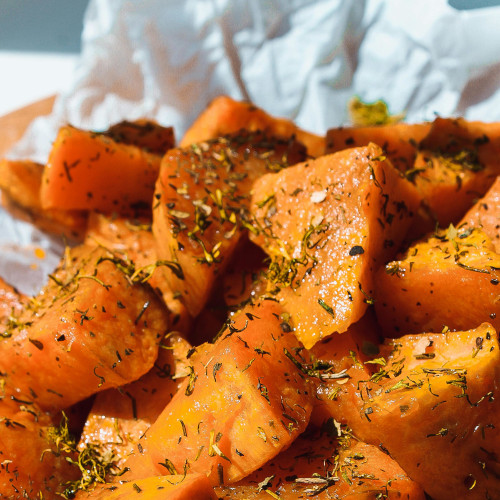
Roasted Sweet Potatoes – Simple Healthy Recipe | Bona Sanita

Roasted Sweet Potatoes with Herbs and Lemon: Simple Healthy Recipe
Few vegetables combine nutritional density, natural sweetness, and cooking versatility as effectively as sweet potatoes. When roasted with fresh herbs and finished with bright lemon juice, this humble root vegetable transforms into a dish that satisfies both comfort food cravings and health-conscious eating goals. The preparation requires minimal effort—cubing, tossing with oil and seasonings, roasting—yet delivers complex flavors through caramelization, herb infusion, and acidic brightness from citrus.
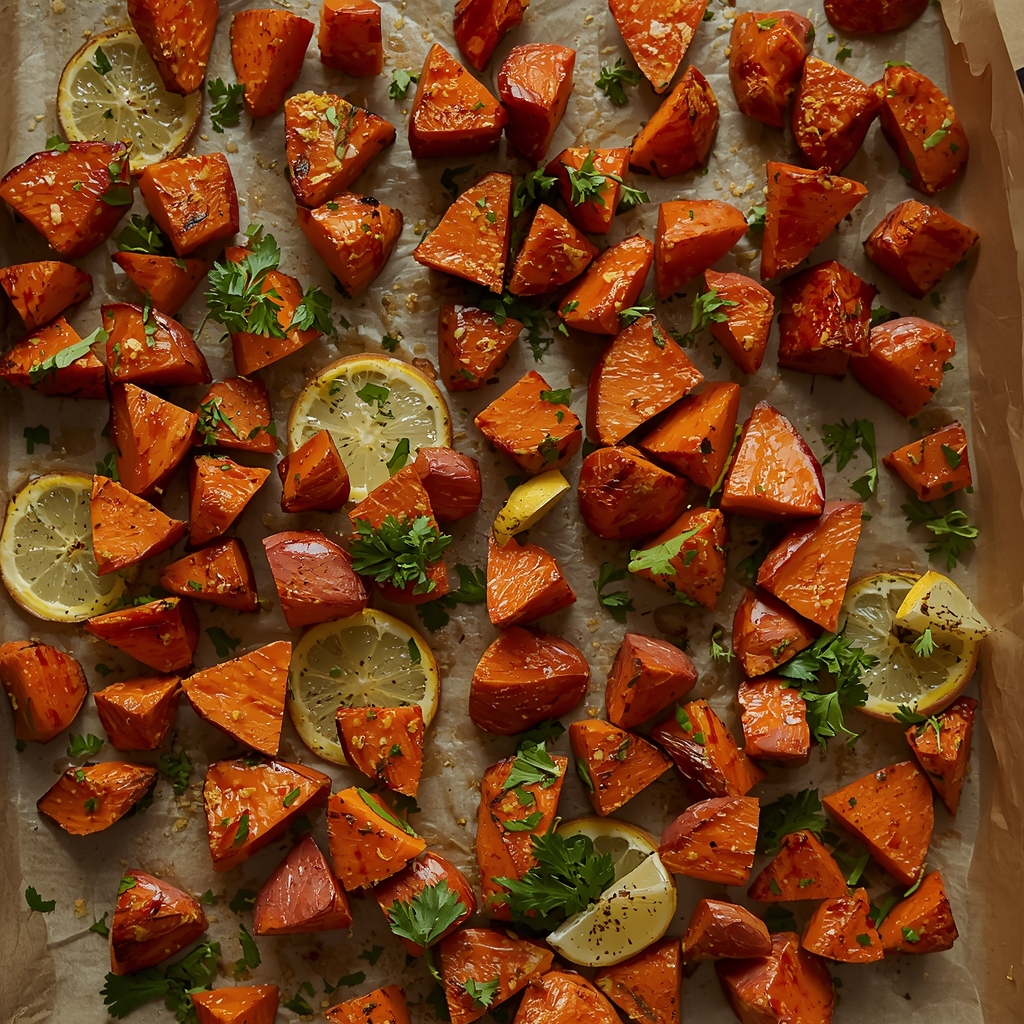
Sweet potatoes have sustained populations across continents for millennia, valued for their ability to grow in diverse climates while providing reliable caloric density and micronutrient richness. Modern nutritional analysis confirms what traditional cuisines understood intuitively: sweet potatoes deliver exceptional value per calorie, supplying vitamins, minerals, fiber, and antioxidant compounds that support multiple physiological systems. This roasted preparation preserves these nutrients while maximizing flavor through proper technique.
Understanding Sweet Potato Nutrition and Health Benefits
Sweet potatoes rank among nature’s most nutrient-dense foods, a classification reserved for ingredients delivering substantial vitamins and minerals relative to caloric content. A single medium sweet potato with skin provides more than 400% of daily vitamin A requirements through beta-carotene, the orange pigment that converts to active vitamin A in the body. This vitamin supports immune function, vision, cellular communication, and reproductive health.
Beyond vitamin A, sweet potatoes supply significant amounts of vitamin C (approximately 37% of daily needs), manganese (43% of daily needs), potassium (15% of daily needs), and vitamin B6 (29% of daily needs). The fiber content—approximately 4 grams per medium potato—supports digestive health, blood sugar regulation, and satiety. This fiber consists of both soluble types that slow digestion and insoluble types that promote regular bowel movements.
Harvard’s Nutrition Source provides comprehensive information on sweet potato nutrition, including their role as exceptional sources of beta-carotene and their benefits for overall health.
The antioxidant profile deserves particular attention. Orange-fleshed sweet potatoes contain abundant beta-carotene, while purple varieties offer anthocyanins—the same compounds found in blueberries and red cabbage. These antioxidants neutralize free radicals that contribute to cellular aging and chronic disease development. Research suggests regular consumption of antioxidant-rich foods like sweet potatoes may reduce inflammation and oxidative stress throughout the body.
Ingredients
For 4 servings:
- 3 medium sweet potatoes (about 700-800g total), peeled or unpeeled
- 3 tablespoons extra virgin olive oil
- 2 tablespoons fresh rosemary, chopped
- 2 tablespoons fresh thyme leaves
- 1 tablespoon fresh parsley, chopped (for garnish)
- Juice of 1/2 lemon (about 2 tablespoons)
- 1 teaspoon sea salt
- 1/2 teaspoon freshly ground black pepper
- Optional: 1/2 teaspoon smoked paprika or cumin for additional depth
Preparation
Step-by-step instructions:
- Preheat oven: Set oven to 425°F (220°C). Line a large baking sheet with parchment paper for easier cleanup and better browning.
- Prepare sweet potatoes: Scrub sweet potatoes thoroughly under running water. Peel if desired (keeping skin increases fiber and nutrient content). Cut into uniform 3/4-inch cubes for even cooking.
- Season: Place cubed sweet potatoes in a large bowl. Add olive oil, rosemary, thyme, salt, and pepper. Toss thoroughly until every piece is well coated. The oil helps herbs adhere while promoting caramelization.
- Arrange on baking sheet: Spread sweet potatoes in a single layer on the prepared baking sheet. Leave space between cubes—overcrowding causes steaming instead of roasting, preventing the desirable crispy edges from forming.
- Roast: Place in preheated oven and roast for 25-30 minutes, flipping halfway through with a spatula. Sweet potatoes are done when fork-tender inside and golden-brown on the edges.
- Finish with lemon: Remove from oven and immediately drizzle with fresh lemon juice. Toss gently to distribute. The acidic brightness balances the natural sweetness while adding aromatic complexity.
- Garnish and serve: Sprinkle with fresh parsley. Serve warm as a side dish or incorporate into grain bowls, salads, or Buddha bowls.
Total time: 35-40 minutes (10 minutes prep, 25-30 minutes cooking)
Cooking Technique: High Heat Roasting
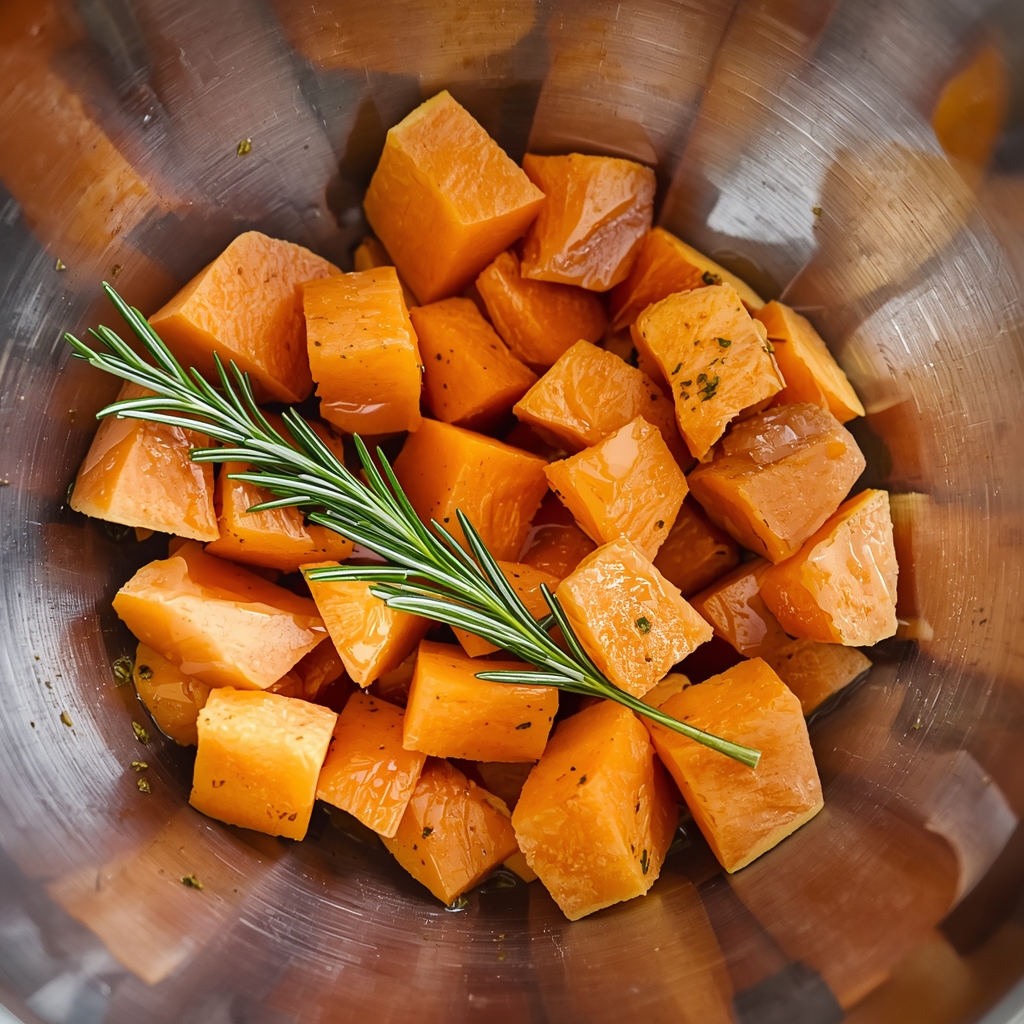
Temperature matters significantly in roasting. The 425°F heat creates conditions necessary for Maillard reactions—chemical transformations between amino acids and sugars that generate hundreds of flavor compounds. These reactions produce the golden-brown surfaces and complex, savory notes that make roasted vegetables compelling. Lower temperatures cook sweet potatoes through but fail to develop these desirable characteristics.
The single-layer arrangement prevents moisture accumulation. When vegetables crowd together, water vapor released during cooking gets trapped, creating steam rather than dry heat. Steamed sweet potatoes soften but remain pale and bland compared to properly roasted versions with caramelized exteriors and fluffy interiors.
Flipping midway through cooking ensures even browning on multiple surfaces. Without this step, contact sides brown while exposed sides remain undercooked. The flip also prevents sticking and allows moisture redistribution for more uniform texture.
Nutritional Profile and Caloric Information
A serving of this roasted sweet potato dish (approximately 175g or 3/4 cup) provides approximately 180-200 calories, depending on olive oil quantity. The macronutrient breakdown includes roughly 30 grams of carbohydrates, 7 grams of fat (primarily heart-healthy monounsaturated fats from olive oil), and 2-3 grams of protein. The 4 grams of fiber represent about 14% of daily requirements.
The micronutrient density is where sweet potatoes truly excel. That single serving delivers more than 400% of vitamin A needs, 30% of vitamin C, 25% of manganese, and meaningful amounts of potassium, vitamin B6, and copper. The antioxidant content varies by potato color—orange varieties provide beta-carotene, purple varieties offer anthocyanins.
The glycemic index (GI) of sweet potatoes ranges from 44 to 94 depending on variety and cooking method. Roasting tends to increase GI compared to boiling, but the fiber content and the addition of fat from olive oil help moderate blood sugar response. For people managing diabetes or insulin sensitivity, pairing sweet potatoes with protein sources further stabilizes glucose levels.
Variations and Flavor Adaptations

The basic roasted sweet potato template accommodates endless customization. For Mediterranean flavors, add oregano, garlic, and finish with feta cheese crumbles. For Middle Eastern influence, use cumin, coriander, and top with tahini drizzle and pomegranate seeds. For warming autumn variations, incorporate cinnamon, nutmeg, and a drizzle of maple syrup before roasting.
Spice additions change the dish character substantially. Smoked paprika adds depth and complexity without heat. Cayenne or red pepper flakes introduce welcome warmth. Curry powder creates an Indian-inspired profile that pairs beautifully with yogurt sauce. Za’atar blend offers herbaceous, nutty notes characteristic of Levantine cuisine.
Nuts and seeds contribute textural contrast and nutritional enhancement. Toasted pecans or walnuts add crunch and healthy fats. Pumpkin seeds (pepitas) provide zinc and magnesium. Sesame seeds contribute calcium and complement Asian-inspired seasonings.
For protein augmentation, toss roasted sweet potatoes with chickpeas before the final 10 minutes of cooking. The legumes crisp up nicely while adding plant-based protein. Alternatively, serve sweet potatoes alongside grilled chicken, baked fish, or tofu for complete meals.
Storage, Meal Prep, and Leftover Applications
Roasted sweet potatoes store excellently, making them valuable for meal preparation. Cool completely before transferring to airtight containers. Refrigerate for up to 5 days or freeze for up to 3 months. Reheat in a 350°F oven for 10-15 minutes to restore some crispness, or use a toaster oven for small portions. Microwaving works for quick reheating but produces softer texture.
Strategic meal prep streamlines weeknight cooking. Roast multiple batches on Sunday, store in portioned containers, and incorporate throughout the week into various meals. Monday might feature sweet potatoes in a grain bowl with quinoa and greens. Wednesday could use them in a frittata or scrambled eggs. Friday might see them pureed into soup or mashed as a side dish.
Leftover applications extend beyond simple reheating. Mash roasted sweet potatoes for use in baking—muffins, quick breads, pancakes all benefit from their moisture and natural sweetness while gaining nutritional enhancement. Puree them into soups for creamy texture without cream. Add to smoothies for sustained energy and beta-carotene. Incorporate into veggie burgers or falafels for binding and flavor.
Common Questions and Practical Concerns
Should I peel sweet potatoes before roasting?
Either approach works. Leaving skin on increases fiber content and reduces preparation time while adding slight textural variation. The skin contains concentrated nutrients and becomes pleasantly crispy when roasted. However, some people prefer the smoother texture of peeled sweet potatoes. If keeping skin, scrub thoroughly to remove dirt and debris.
Why did my sweet potatoes turn out mushy instead of crispy?
Mushiness typically results from insufficient heat, overcrowding on the pan, or excess moisture. Ensure oven reaches full temperature before adding potatoes. Arrange cubes in single layer with space between pieces. Pat sweet potatoes dry after cutting if they seem particularly wet. Using parchment paper helps, but avoid overlapping pieces.
Can I use dried herbs instead of fresh?
Yes, though quantities require adjustment. Use approximately one-third the amount of dried herbs compared to fresh—so 2 teaspoons dried rosemary and thyme combined instead of the 4 tablespoons fresh herbs called for. Dried herbs work well but provide less aromatic brightness than fresh versions. Consider adding fresh parsley as garnish even when using dried herbs for cooking.
How do I prevent sweet potatoes from sticking to the pan?
Parchment paper creates a non-stick surface while promoting even browning. If using bare baking sheets, ensure they’re well-oiled. Avoid moving potatoes during first 10-15 minutes of roasting—they need time to develop crusts that naturally release from the pan. Metal spatulas work better than silicone for flipping, as they slide under pieces more effectively.
Are sweet potatoes suitable for people with diabetes?
Yes, when consumed in appropriate portions as part of balanced meals. Sweet potatoes contain fiber that slows carbohydrate absorption. Their micronutrient density provides value beyond simple calories. Pairing sweet potatoes with protein and fat sources (like this recipe’s olive oil, or serving with chicken or fish) further moderates blood sugar response. Boiled sweet potatoes have lower glycemic impact than roasted, though both can fit into diabetic meal plans with proper portion control.
Can children eat this dish?
Absolutely. Sweet potatoes’ natural sweetness appeals to children while providing nutrients crucial for growth and development. The soft texture works well for young children still developing chewing skills. You may want to reduce or omit strong herbs like rosemary for very young or herb-sensitive children, though many kids enjoy the flavors. Cutting sweet potatoes into larger wedges rather than cubes can make them easier for small hands to manage as finger food.
How does this compare nutritionally to regular potatoes?
Sweet potatoes and white potatoes offer different nutritional profiles. Sweet potatoes provide dramatically more vitamin A (white potatoes contain virtually none), more fiber, and more antioxidants. White potatoes supply more potassium and vitamin C. Sweet potatoes generally have lower glycemic indexes, especially when boiled or steamed. Both can fit into healthy diets; sweet potatoes simply offer more micronutrient density per calorie.
Can I roast sweet potatoes ahead for entertaining?
Yes, with technique adjustments. Roast sweet potatoes to about 80% doneness—still slightly firm in centers. Cool and refrigerate up to 2 days. Before serving, finish roasting at 425°F for 10-15 minutes until heated through and edges crisp up. This approach allows advance preparation while preserving optimal texture. Add fresh herbs and lemon juice just before serving for brightest flavors.
This roasted sweet potato dish exemplifies healthy cooking at its most practical and delicious. The preparation honors the ingredient’s natural qualities while enhancing them through proper technique, complementary seasonings, and bright finishing touches. The nutritional profile supports wellness across multiple dimensions—from immune function through vitamin A to digestive health via fiber to cardiovascular protection through potassium and antioxidants. Within our collection of nourishing recipes, this preparation demonstrates that health-supportive eating need not sacrifice flavor, satisfaction, or convenience. Master this basic technique, and you’ve added a versatile foundation recipe that adapts to countless variations while consistently delivering both nutrition and pleasure.
