

7 Natural Ways to Sleep Better – Improve Rest & Reduce Insomnia | Bona Sanitas
Introduction: The Sleep Crisis Nobody Talks About
If you’ve ever lain awake at 2 AM, staring at the ceiling while your mind races through tomorrow’s to-do list, last week’s embarrassing moment, and every existential question you’ve ever had—you’re not alone. According to the Centers for Disease Control and Prevention (CDC), one in three adults doesn’t get enough sleep. We’re collectively exhausted, yet somehow we’ve normalized functioning on insufficient rest.
The consequences of poor sleep extend far beyond feeling groggy in the morning. Chronic sleep deprivation is linked to increased risk of obesity, diabetes, cardiovascular disease, weakened immunity, anxiety, depression, and impaired cognitive function. Sleep isn’t a luxury or something to sacrifice for productivity—it’s a biological necessity as fundamental as eating and breathing.
But here’s the good news: you don’t need prescription medications or expensive gadgets to sleep better. Most sleep problems respond remarkably well to simple, evidence-based behavioral changes. This guide presents seven natural, scientifically validated strategies that can transform your sleep quality, starting tonight.
For more evidence-based wellness habits, explore our health and nutrition collection featuring simple, science-backed strategies for better living.
Understanding Why You Can’t Sleep
Before diving into solutions, it helps to understand what’s likely disrupting your sleep. Modern life creates multiple obstacles to quality rest:
Circadian rhythm disruption: Your body has an internal 24-hour clock (circadian rhythm) that regulates sleep-wake cycles, hormone release, body temperature, and other functions. Artificial light—especially blue light from screens—confuses this system by suppressing melatonin, the hormone that signals it’s time to sleep.
Chronic stress and hyperarousal: Your nervous system has two modes: sympathetic (fight-or-flight) and parasympathetic (rest-and-digest). Modern stressors keep many people stuck in sympathetic mode, with elevated cortisol levels that make relaxation difficult. You can’t sleep when your body thinks there’s danger.
Poor sleep hygiene: Inconsistent sleep schedules, uncomfortable sleep environments, stimulants consumed too late in the day, and lack of a pre-sleep routine all contribute to insomnia.
Mental rumination: Anxiety, worry, and an inability to “turn off” your thoughts activate the brain’s alertness systems, preventing the gradual mental quieting necessary for sleep onset.
The strategies below address these root causes through behavioral changes that work with your biology rather than against it.
Strategy 1: Eliminate Screens One Hour Before Bed
This is perhaps the single most impactful change you can make, yet it’s the one people resist most. The blue wavelength light emitted by phones, tablets, computers, and TVs directly suppresses melatonin production. Research published by Harvard Medical School shows that blue light exposure before bed can delay sleep onset by over an hour and reduce REM sleep quality.
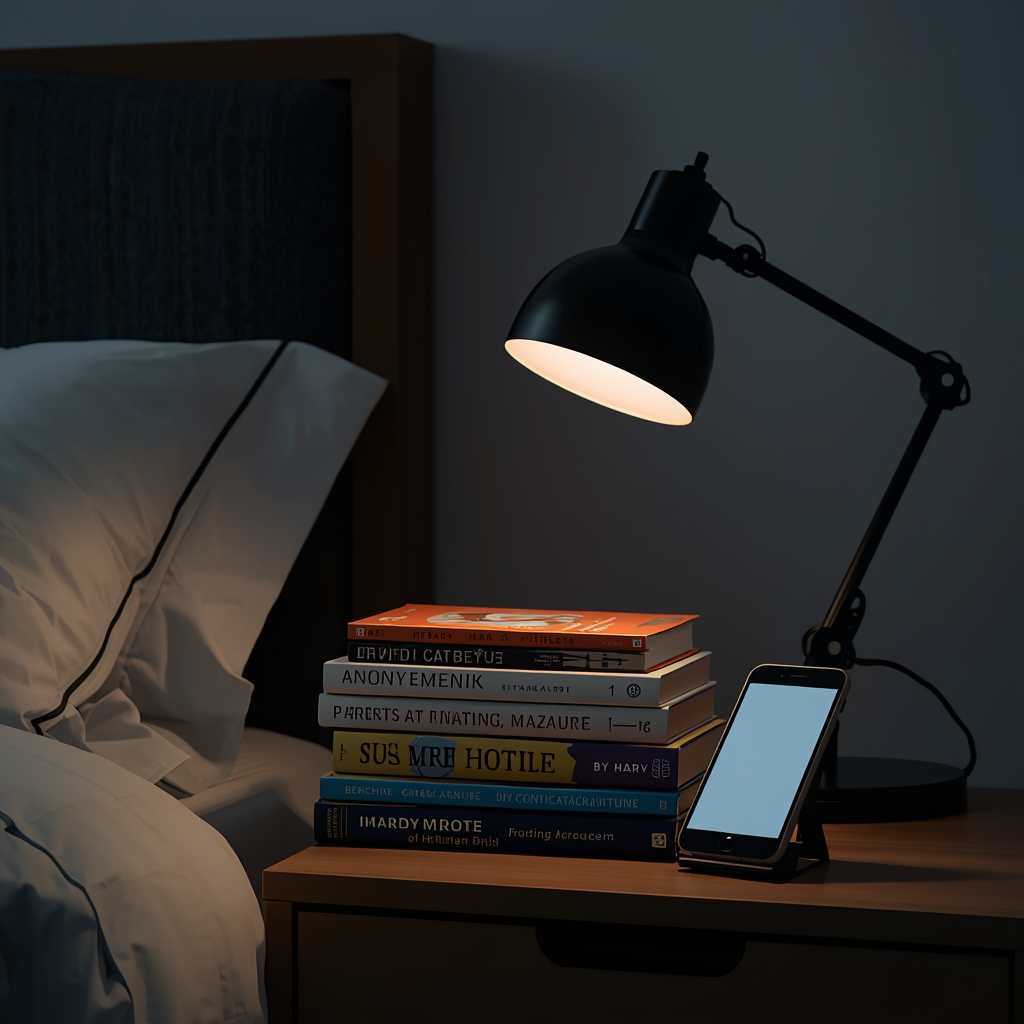
Why this matters: Melatonin doesn’t just make you sleepy—it regulates your entire sleep cycle, including sleep depth and timing. When melatonin is suppressed, your brain remains in “daytime mode” even though it’s nighttime. Additionally, the content you consume on screens (news, social media, work emails) tends to be mentally stimulating or stress-inducing, further activating your brain when it should be winding down.
What to do instead:
- Read a physical book or magazine: Fiction is especially good because narrative engagement relaxes the analytical parts of your brain.
- Practice gentle stretching or restorative yoga: Light movement releases physical tension without raising your heart rate.
- Journal: Writing down worries, to-do lists, or reflections helps externalize thoughts so they stop cycling in your mind.
- Take a warm bath or shower: The subsequent drop in body temperature after getting out signals to your body that it’s time to sleep.
- Listen to calming music or a guided meditation: Audio content without visual stimulation is fine.
Implementation tips: Set an alarm for one hour before your target bedtime. When it goes off, put your phone in another room (seriously—not just face-down on the nightstand). If you absolutely must use a device, enable night mode/blue light filters and keep brightness at the lowest readable setting. Better yet, use this time as an opportunity to reconnect with analog activities you’ve neglected.
Strategy 2: Optimize Your Sleep Environment—Cool, Dark, and Quiet
Your bedroom environment dramatically influences sleep quality. According to research from the Sleep Foundation, the ideal sleep environment is cool, dark, and quiet.
Temperature: 60-67°F (15-19°C)
Your body temperature naturally drops as part of the sleep process. A cooler room facilitates this biological requirement. Most people sleep best when room temperature is around 65°F (18°C). If you run hot or cold, adjust within the 60-67°F range to find your sweet spot.
Practical tips: Open a window, use a fan, adjust your thermostat down at night, or use breathable bedding materials (cotton, linen, bamboo). If you share a bed with someone who prefers different temperatures, consider separate blankets or a mattress with dual temperature zones.
Darkness: Complete blackout if possible
Even small amounts of light can disrupt sleep. Light exposure during sleep suppresses melatonin and can fragment sleep architecture, reducing time in deep sleep and REM sleep stages.
Practical tips: Install blackout curtains or blinds, use a sleep mask, cover or remove LED lights from electronics (those little green or blue lights from chargers, smoke detectors, etc.), and use red-spectrum nightlights if you need some illumination for safety (red light has minimal melatonin suppression compared to other wavelengths).
Quiet: Minimize disruptions
Noise disruptions fragment sleep even if you don’t fully wake up. Your brain continues to process sounds during sleep, and sudden noises trigger brief arousals that prevent deep sleep.
Practical tips: Use earplugs, white noise machines, or fans to mask environmental sounds. If you live in a noisy area, consider soundproofing measures like heavy curtains, rugs, or acoustic panels.
Strategy 3: Build a Consistent Pre-Sleep Routine
A predictable, relaxing routine signals to your brain that sleep is approaching. Think of it as a psychological runway for landing into sleep. When you perform the same sequence of calming activities each night, your brain begins associating those activities with sleep, making the transition easier.
Components of an effective wind-down routine (30-60 minutes):
Start with logistics (60 minutes before bed): Prepare for tomorrow—set out clothes, pack your bag, prep breakfast ingredients. Getting tasks done removes mental clutter about tomorrow’s morning.
Hygiene and self-care (45 minutes before bed): Brush teeth, wash face, skincare routine. These familiar activities signal the day is ending.
Relaxation practices (30 minutes before bed): This is your screen-free relaxation time—reading, gentle stretching, meditation, journaling, or a warm bath.
Final preparations (15 minutes before bed): Dim lights, adjust room temperature, set out water, ensure alarm is set. Make your bedroom as inviting as possible.
Why routines work: Humans are creatures of habit. Our brains love patterns and predictability. A consistent routine leverages classical conditioning—the same principle that makes you salivate when you smell coffee or feel alert when you sit at your desk. By repeating the same sequence nightly, you’re training your brain to automatically shift into “sleep mode” when the routine begins.
Strategy 4: Try Calming Herbal Teas
Certain herbs have mild sedative properties and can support relaxation without the side effects of pharmaceutical sleep aids. While herbal teas won’t knock you out like a sleeping pill, they can gently promote calmness and serve as a pleasant component of your wind-down routine.

Evidence-based options:
Chamomile: Contains apigenin, an antioxidant that binds to specific receptors in your brain that may promote sleepiness and reduce anxiety. Studies show chamomile tea can improve sleep quality, especially when consumed regularly.
Lavender: Known for its calming scent and taste. Research indicates lavender can reduce anxiety and improve sleep quality. Can be consumed as tea or used as essential oil aromatherapy.
Valerian root: One of the most studied herbal sleep aids. Valerian appears to increase levels of GABA (gamma-aminobutyric acid), a neurotransmitter that promotes relaxation. Effects are subtle but can accumulate with consistent use.
Passionflower: May increase GABA levels similar to valerian. Some studies show it can improve sleep quality and reduce nighttime awakenings.
Lemon balm: A mild sedative that can reduce anxiety and promote calmness. Often combined with other herbs for enhanced effect.
How to use: Drink a cup of herbal tea 30-60 minutes before bed as part of your wind-down routine. Choose caffeine-free varieties and avoid adding sugar (which can cause energy fluctuations). The warm liquid itself is soothing, and the ritual of tea preparation can be meditative.
Strategy 5: Practice the 4-7-8 Breathing Technique
The 4-7-8 breathing method is a simple but powerful relaxation technique developed by Dr. Andrew Weil. It’s based on pranayama, an ancient yogic practice that focuses on breath control to influence mental state.
How it works:
Controlled breathing activates the parasympathetic nervous system (your “rest and digest” mode) while deactivating the sympathetic nervous system (your “fight or flight” mode). This physiological shift reduces cortisol, lowers heart rate, and promotes the relaxed state necessary for sleep.
The technique:
- Exhale completely through your mouth, making a whoosh sound
- Close your mouth and inhale quietly through your nose for a count of 4
- Hold your breath for a count of 7
- Exhale completely through your mouth for a count of 8, making a whoosh sound
- Repeat the cycle 3-4 times initially; you can build up to 8 cycles
Important notes: The ratio (4:7:8) matters more than the absolute speed. If holding for 7 seconds is difficult, you can do 2-3.5-4 or 3-5.25-6—just maintain the ratio. Keep the tip of your tongue against the ridge behind your upper front teeth throughout. Don’t worry if you feel lightheaded at first; this is normal and will pass as you practice.
When to use it: Practice 4-7-8 breathing when you first lie down for sleep, if you wake during the night, or anytime you feel stressed or anxious during the day. Many people fall asleep before completing 4 cycles once they’re practiced with the technique.
Strategy 6: Maintain a Consistent Sleep Schedule
Going to bed and waking up at the same time every day—yes, even on weekends—is one of the most effective ways to improve sleep quality. Your circadian rhythm thrives on predictability.
Why consistency matters: Your body has internal biological clocks that regulate not just sleep, but also hormone release, body temperature, digestion, and immune function. These clocks synchronize best when you maintain regular sleep-wake times. Inconsistent schedules create a phenomenon similar to jet lag, called “social jet lag,” which leaves you perpetually groggy and impairs performance.
Benefits of a consistent schedule:
- Easier sleep onset: Your body naturally becomes sleepy at your regular bedtime
- Better sleep quality: More time in restorative deep sleep and REM sleep
- Natural awakening: You’ll often wake shortly before your alarm, feeling more refreshed
- Improved daytime energy: Predictable sleep patterns optimize alertness and performance
- Mood stability: Consistent sleep regulates emotional regulation systems
How to establish a schedule: Choose a wake time that works for your life and stick to it every day. Count backward 7-9 hours to determine your bedtime (most adults need 7-9 hours). Start your wind-down routine 30-60 minutes before bedtime. If you’re currently sleep-deprived, you might need closer to 9 hours initially to catch up on sleep debt.
Weekend adjustment: If you must sleep in on weekends, limit it to one extra hour. Sleeping until noon on Saturday will make Sunday night miserable and Monday exhausting.
Strategy 7: Cut Off Caffeine by Mid-Afternoon
Caffeine is the world’s most widely used psychoactive substance—and it’s sabotaging your sleep more than you realize. Caffeine has a half-life of 5-6 hours, meaning if you drink coffee at 4 PM, 50% of the caffeine is still in your system at 10 PM. But caffeine’s sleep-disrupting effects persist even longer than that.
How caffeine affects sleep: Caffeine blocks adenosine receptors in your brain. Adenosine is a neurotransmitter that accumulates throughout the day and promotes sleepiness—it’s part of your body’s natural sleep drive. When caffeine blocks these receptors, you don’t feel tired even when adenosine levels are high. This doesn’t just delay sleep onset; it also reduces total sleep time and decreases time spent in deep, restorative sleep stages.
The 2 PM cutoff rule: To minimize sleep disruption, avoid consuming caffeine after 2-3 PM. This gives your body enough time to metabolize most of it before bedtime. If you’re particularly sensitive to caffeine or have sleep difficulties, consider stopping even earlier—noon or even switching to decaf entirely.
Hidden caffeine sources: Coffee and energy drinks are obvious, but caffeine also hides in tea (even green tea), chocolate, some medications (pain relievers, diet pills), pre-workout supplements, and certain soft drinks. Read labels carefully.
Alternatives: If you crave a warm afternoon beverage, try herbal tea, decaf coffee, golden milk (turmeric latte), or hot water with lemon. If you need an energy boost, try a 10-minute walk, cold water on your face, or brief exposure to bright light—all provide alertness without disrupting sleep.
Additional Evidence-Based Sleep Tips
Get morning sunlight exposure: Bright light exposure within the first hour of waking helps anchor your circadian rhythm, making it easier to fall asleep that night. Aim for 10-30 minutes of outdoor light exposure in the morning.
Exercise regularly—but time it right: Regular physical activity improves sleep quality and reduces time to fall asleep. However, vigorous exercise within 2-3 hours of bedtime can be too stimulating. Morning or early afternoon exercise is ideal.
Watch your evening eating: Large meals within 2-3 hours of bedtime can cause discomfort and indigestion that disrupts sleep. However, going to bed hungry can also prevent sleep. A light snack combining complex carbs and protein (like whole grain toast with nut butter) can promote sleep.
Limit alcohol: While alcohol might make you drowsy initially, it severely disrupts sleep architecture, reducing REM sleep and causing fragmented, poor-quality sleep. If you drink, do so earlier in the evening and moderately.
Use your bed only for sleep (and sex): This strengthens the mental association between your bed and sleep. Don’t work, eat, or watch TV in bed.
Frequently Asked Questions
How long does it take to see sleep improvement?
Many people notice some improvement within 3-7 days of implementing these strategies consistently. However, if you have chronic insomnia or significant sleep debt, it may take 2-4 weeks to see substantial changes. Be patient and consistent.
What if I wake up during the night?
Brief awakenings are normal—you have 4-6 sleep cycles per night, and light awakenings between cycles are common. If you wake and can’t fall back asleep within 20 minutes, get out of bed and do a quiet, non-stimulating activity (read with dim light, gentle stretching, meditation) until you feel sleepy again. Don’t check the time or your phone.
Are naps okay?
Short naps (20-30 minutes) before 3 PM won’t disrupt nighttime sleep and can boost afternoon alertness. Longer naps or naps later in the day can make it harder to fall asleep at night.
Should I take melatonin supplements?
Melatonin can be helpful for short-term use (jet lag, shift work adjustment) but isn’t recommended for long-term nightly use without medical supervision. Behavioral changes are more effective and sustainable for most people. If you do use melatonin, take a low dose (0.5-3mg) 1-2 hours before bedtime.
Conclusion: Sleep is a Skill You Can Develop
Good sleep isn’t something that just happens to lucky people—it’s a skill you develop through consistent, evidence-based habits. The seven strategies outlined here work synergistically: each one supports your body’s natural sleep systems in different ways. You don’t need to implement all seven perfectly from day one. Start with the one or two that resonate most strongly with you, establish those habits, then gradually add others.
The investment in better sleep pays enormous dividends. You’ll have more energy, clearer thinking, better mood regulation, improved physical health, and enhanced quality of life. Sleep is the foundation upon which everything else in your life is built—without it, even the best diet, exercise routine, or stress management strategy will fall short.
Tonight, choose one strategy to implement. Your well-rested future self will thank you. 🌙💤
For more evidence-based wellness strategies, explore our health and nutrition collection.