
Healthy New Year’s Feast: Elegant and Nutritious Recipes | Bona Sanitas

Healthy New Year’s Feast: Elegant and Nutritious Recipes
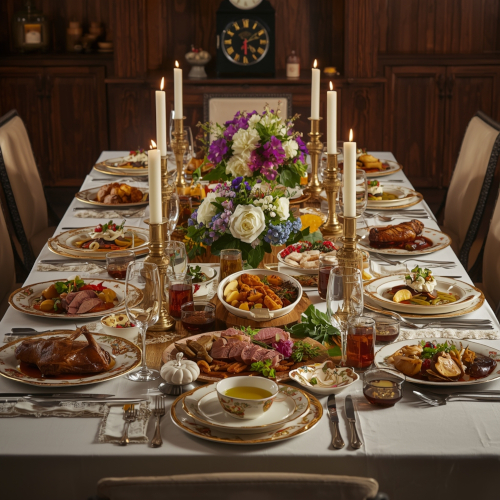
New Year’s Eve carries a particular kind of energy — the simultaneous pull toward celebration and intention. We want the evening to feel special, indulgent, and memorable, while many of us also carry a quiet wish to step into January feeling light, vital, and well. The good news is that these goals are not in tension. With thoughtful ingredient choices and a few culinary techniques, it is entirely possible to host a New Year’s feast that is genuinely elegant, deeply satisfying, and nutritionally nourishing — a meal that honors both the celebratory spirit of the evening and the wellness intentions that accompany the new year.
This menu is designed to do exactly that. It draws on seasonal produce at its winter peak, proteins with outstanding nutritional profiles, and natural sweeteners and flavor-building techniques that maximize pleasure without relying on excessive fat, refined sugar, or caloric density. Each course has been chosen not just for what it tastes like but for what it does for the body: supporting energy levels through a long evening, easing digestion, and providing the antioxidants, omega-3 fatty acids, and micronutrients that help you feel genuinely good the morning after. Browse more inspiration in our healthy recipes collection.
The complete menu moves from a sparkling welcome cocktail through an elegant appetizer, a sophisticated main course, and a light, creamy dessert — four courses that together form a complete, balanced festive meal. Every recipe includes advance preparation notes, so the evening itself can be spent enjoying your guests rather than managing a stressful kitchen.
Whether you are hosting an intimate dinner for four or a larger gathering, this menu scales easily and delivers results that look and taste like a great deal more effort than they require.
The Philosophy Behind a Healthy Festive Feast
Traditional holiday meals often leave people feeling heavy, sluggish, and slightly regretful — not the ideal starting point for a new year. The usual culprits are predictable: oversized portions of calorie-dense dishes, rich cream-based sauces, excess alcohol, and a meal structure that front-loads calories without enough fiber or protein to moderate appetite and digestion.
A nutritionally intelligent festive menu addresses each of these patterns without sacrificing any of the pleasure. The principles are straightforward. Prioritize quality proteins at the center of the meal — they are the most satiating macronutrient and support stable energy over a long evening. Build half the plate from colorful vegetables, which provide fiber, vitamins, minerals, and the visual vibrancy that makes a dish look as good as it tastes. Use fats strategically — good-quality olive oil, the natural fat in salmon, the medium-chain triglycerides in coconut milk — rather than minimizing fat indiscriminately. Let natural sweetness from pomegranate, beet, citrus, and berries do the flavor work that refined sugar often substitutes for. And choose cooking techniques — roasting, steaming, quick pan-searing, gentle oven baking — that develop flavor through the Maillard reaction and caramelization rather than through butter and cream.
Research from institutions like the Harvard T.H. Chan School of Public Health consistently shows that meals built around this architecture — quality protein, abundant vegetables, healthy fats, minimal refined sugar — produce better long-term health outcomes and, importantly for a festive evening, maintain more stable blood sugar and energy levels than carbohydrate- and sugar-heavy alternatives. You end the evening feeling satisfied rather than depleted, and the morning after is kinder.
Complete Menu: From Welcome Cocktail to Dessert
This four-course menu has been designed so that all four components can be prepared largely in advance, freeing you to be present with your guests on the evening itself. The panna cotta requires four hours of refrigeration minimum and is best made the day before. The beet carpaccio components — cooked beets, citrus segments, walnut toasting — can all be done the morning of the dinner and assembled at serving time. The salmon herb crust can be mixed and refrigerated hours in advance. Only the roasted vegetables and the final salmon bake require genuine last-minute attention, and both take under thirty minutes.
Welcome Cocktail: Sparkling Pomegranate and Rosemary Spritz
A festive, antioxidant-rich opening drink that works equally beautifully with or without alcohol. Pomegranate juice is one of the most antioxidant-dense juices available — it contains punicalagins and anthocyanins that have been studied for their cardiovascular and anti-inflammatory properties. Rosemary contributes aromatic complexity and the visual elegance of a herb-infused drink. The result is a drink that looks sophisticated, tastes festive, and supports rather than undermines the evening.
For 6 servings:
- 300 ml pure pomegranate juice (unsweetened)
- 150 ml sparkling water
- Juice of 2 limes
- 6 fresh rosemary sprigs
- Ice cubes
- Fresh pomegranate seeds for garnish
- Optional: 150 ml prosecco or sparkling wine for the alcoholic version
Step-by-step instructions:
- Infuse: Lightly roll each rosemary sprig between your palms to release the aromatic oils in the leaves without bruising the herb. Add the sprigs to a large pitcher with the pomegranate juice and lime juice.
- Refrigerate: Cover and refrigerate for at least 15 minutes to allow the rosemary to infuse. This step can be done up to 2 hours in advance — the longer the infusion, the more pronounced the herbal note.
- Assemble: Add the sparkling water (and prosecco if using) to the pitcher just before serving. Stir gently to combine without losing the carbonation.
- Serve: Pour over ice into glasses and garnish each with a small scatter of fresh pomegranate seeds and a small rosemary sprig across the rim.
Total time: 5 minutes + 15 minutes infusion
Appetizer: Multicolored Beet Carpaccio with Citrus and Goat Cheese
A stunning appetizer that delivers visual drama alongside genuine nutritional substance. The combination of roasted red and golden beets, blood orange and grapefruit segments, creamy goat cheese, and toasted walnuts creates a plate that manages to be simultaneously bold, elegant, and light. Beets are rich in dietary nitrates that the body converts to nitric oxide, supporting blood vessel relaxation and circulation. Citrus fruits provide vitamin C that enhances iron absorption from the meal that follows. Walnuts contribute omega-3 fatty acids and a satisfying crunch that contrasts beautifully with the soft beet and creamy cheese.
For 6 servings:
- 3 medium red beets
- 2 golden beets
- 2 blood oranges
- 1 pink grapefruit
- 150 g fresh goat cheese, crumbled
- 60 g walnut halves, roughly crushed and lightly toasted
- A generous handful of fresh arugula
- 3 tablespoons extra virgin olive oil
- 2 tablespoons aged balsamic vinegar
- Fleur de sel and freshly ground black pepper
- A few fresh mint leaves for garnish
Step-by-step instructions:
- Cook beets: Steam or roast the beets until completely tender — approximately 45 minutes steaming, or 60 minutes wrapped individually in foil in a 200°C oven. Allow to cool completely, then peel (wear gloves to avoid staining). This step can be done up to 24 hours in advance.
- Slice: Using a sharp knife or mandoline, slice all beets into very thin rounds — approximately 2–3mm. Keep red and golden beets separate until plating to prevent color bleeding.
- Prepare citrus: Using a sharp knife, cut the top and bottom from each citrus fruit, stand it upright, and cut away the peel and white pith in downward strokes following the curve of the fruit. Slice into rounds or segment between the membranes. Reserve any juice that escapes — it can be added to the dressing.
- Toast walnuts: Heat a dry skillet over medium heat and toast the walnuts for 3–4 minutes, shaking occasionally, until fragrant and lightly golden.
- Plate: Arrange alternating rounds of red and golden beet on each plate, slightly overlapping and fanning outward. Tuck citrus segments and rounds among the beet slices. Scatter crumbled goat cheese and toasted walnuts over the top.
- Dress and garnish: Whisk together the olive oil and balsamic vinegar and drizzle lightly over each plate. Season with fleur de sel and freshly ground pepper. Finish with a few arugula leaves and torn mint leaves.
Total time: 20 minutes (plus 45–60 minutes beet cooking time, done in advance)

Main Course: Herb-Crusted Salmon with Roasted Winter Vegetables
The centerpiece of the menu — visually impressive, effortlessly elegant, and nutritionally outstanding. Wild salmon is among the best food sources of long-chain omega-3 fatty acids (EPA and DHA), which support cardiovascular health, brain function, and anti-inflammatory pathways. The herb crust adds aromatic complexity and a satisfying textural contrast to the silky fish beneath it. The winter vegetables — Brussels sprouts, carrots, and butternut squash — roast to caramelized perfection alongside, providing fiber, beta-carotene, vitamin C, and the deep, sweet flavor that only high-heat roasting can produce.
For 6 servings:
- 6 wild salmon fillets, approximately 150g each, skin on
- 3 tablespoons Dijon mustard
- 50 g panko breadcrumbs
- 3 tablespoons fresh flat-leaf parsley, finely chopped
- 2 tablespoons fresh dill, finely chopped
- Finely grated zest of 1 unwaxed lemon
- 2 tablespoons extra virgin olive oil
- Salt and freshly ground black pepper
For the roasted vegetables:
- 500 g Brussels sprouts, outer leaves removed and halved
- 3 medium carrots (multicolored if available), cut into batons
- ½ medium butternut squash, peeled and cut into 2cm cubes
- 2 tablespoons extra virgin olive oil
- 2 teaspoons raw honey or maple syrup
- 6 sprigs fresh thyme
- Salt and freshly ground black pepper
Step-by-step instructions:
- Preheat oven: Heat the oven to 200°C (400°F). Line two baking trays with parchment paper.
- Season and roast vegetables: Toss the Brussels sprouts, carrots, and squash in a large bowl with olive oil, honey or maple syrup, thyme, salt, and pepper. Spread in a single layer on one baking tray — do not overcrowd, as crowded vegetables steam rather than roast. Place in the oven for 25–30 minutes, turning once halfway, until tender and caramelized at the edges.
- Prepare herb crust: While vegetables roast, combine the panko, chopped parsley, dill, lemon zest, olive oil, and a pinch of salt and pepper in a bowl. Mix until the breadcrumbs are evenly coated and the mixture holds together when pressed. This can be prepared and refrigerated up to 4 hours in advance.
- Prepare salmon: Pat the salmon fillets dry with kitchen paper and season lightly on both sides. Brush the top of each fillet generously with Dijon mustard — the mustard acts as both flavoring and adhesive for the herb crust.
- Apply crust: Press a generous layer of the herb crust mixture firmly onto the mustard-coated top of each fillet, patting to adhere evenly.
- Bake salmon: Place the crusted salmon fillets on the second lined baking tray. Bake for 12–15 minutes depending on the thickness of the fillets, until the crust is golden and the salmon flesh is just opaque in the center with a slight translucency remaining. Do not overcook — salmon continues cooking briefly after removal from the oven, and slightly underdone is far preferable to overdone for both flavor and texture.
- Serve: Arrange roasted vegetables on a warmed serving platter or individual plates. Place a herb-crusted salmon fillet on each portion of vegetables. Finish with a wedge of lemon alongside and a few sprigs of fresh herbs for garnish.
Total time: 45 minutes (15 minutes preparation + 30 minutes cooking)
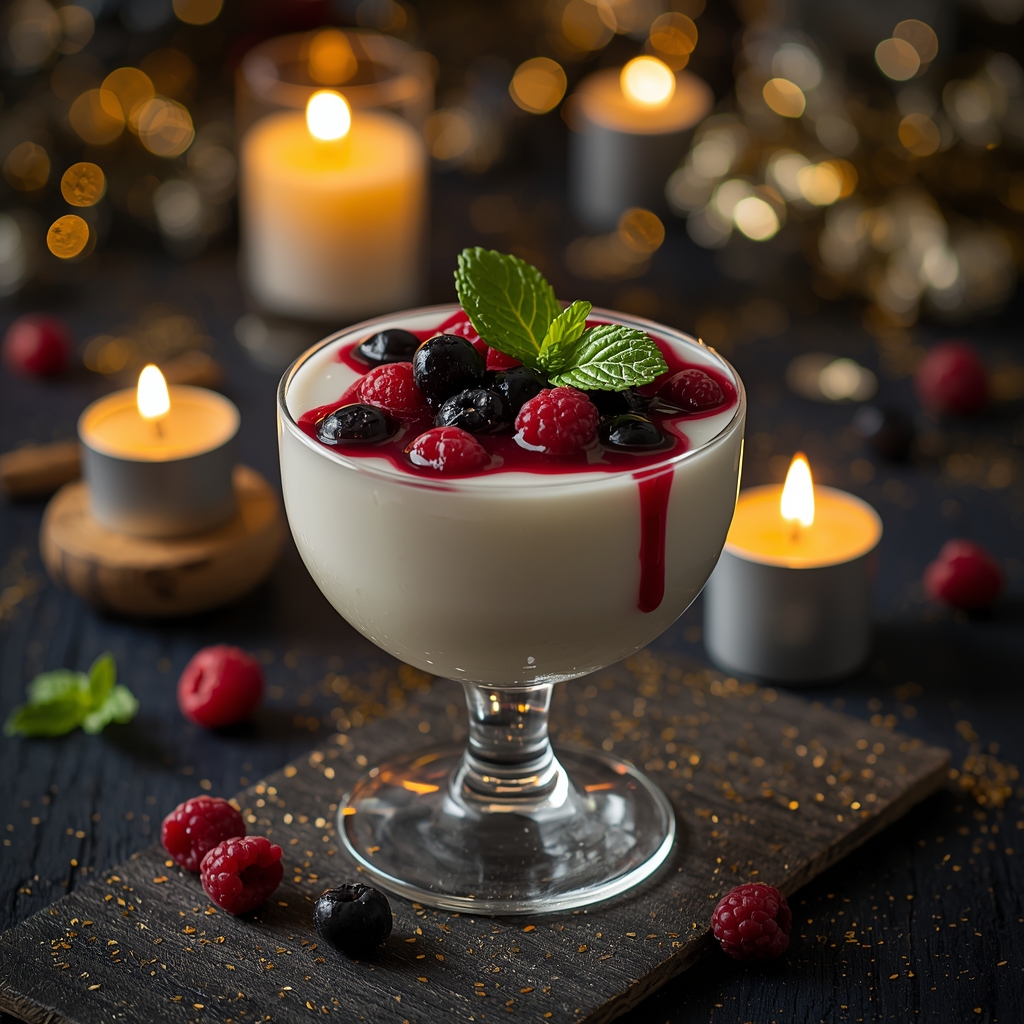
Dessert: Coconut and Vanilla Panna Cotta with Berry Compote
A light, silky dessert that satisfies the craving for something sweet and creamy without the heaviness of a traditional cream-based pudding. Coconut milk replaces dairy cream entirely — it provides natural richness from medium-chain triglycerides alongside a subtly tropical flavor that pairs beautifully with vanilla and tart berries. Maple syrup provides natural sweetness with trace minerals absent in refined sugar. The berry compote delivers a final burst of antioxidants, vitamin C, and the bright acidity that prevents the dessert from feeling cloying. Make this the day before for maximum convenience and best texture.
For 6 servings:
- 400 ml full-fat coconut milk
- 200 ml unsweetened almond milk
- 3 tablespoons pure maple syrup
- 1 vanilla bean, split lengthways and seeds scraped
- 3 gelatin sheets (or 2 teaspoons agar-agar for a fully vegan version)
For the berry compote:
- 300 g mixed berries — raspberries, blueberries, blackberries, fresh or frozen
- 2 tablespoons pure maple syrup
- Juice of ½ lemon
- Fresh mint leaves for garnish
Step-by-step instructions:
- Bloom gelatin: Submerge the gelatin sheets in a bowl of cold water for 10 minutes until fully softened. If using agar-agar, skip this step — it is added directly to the liquid.
- Heat the base: In a medium saucepan, combine the coconut milk, almond milk, maple syrup, and vanilla bean with its seeds. Heat over medium-low heat, stirring occasionally, until the mixture is hot and steaming — approximately 70°C. Do not allow it to boil, as boiling alters the texture and can cause the coconut milk to separate.
- Add setting agent: Remove the pan from the heat. Squeeze the gelatin sheets to remove excess water and add them to the hot liquid, stirring gently until completely dissolved. If using agar-agar, add it to the liquid before heating and bring to a gentle boil for 2 minutes while stirring, then remove from heat.
- Strain and pour: Remove the vanilla bean. Pour the mixture through a fine-mesh sieve into a jug for easy pouring. Divide evenly among 6 glasses or ramekins.
- Refrigerate: Allow to cool to room temperature, then refrigerate for at least 4 hours or overnight. The panna cotta is ready when set but still trembles gently when the glass is shaken.
- Make compote: Combine the berries, maple syrup, and lemon juice in a small saucepan. Cook over medium heat for 8–10 minutes, stirring occasionally, until the berries have broken down and released their juices and the mixture has thickened slightly. Allow to cool completely before storing in the refrigerator.
- Serve: Spoon a generous portion of berry compote over each set panna cotta just before serving. Garnish with a small fresh mint leaf. Serve in the glasses for an elegant, unfussy presentation.
Total time: 20 minutes + minimum 4 hours refrigeration
Planning and Preparation Timeline
The secret to an elegant, stress-free New Year’s dinner lies in spreading the preparation across the two days before the event. Here is a practical timeline:
Two days before, make the panna cotta — they actually improve with 24–36 hours of setting time and the extra day gives you complete confidence in the dessert course. One day before, cook and peel the beets, toast the walnuts, make the berry compote, and mix the herb crust for the salmon (store covered in the refrigerator). The morning of the dinner, segment the citrus and prepare all vegetable prep for the main course. One hour before guests arrive, set the table, prepare the cocktail base, and bring all refrigerated components to room temperature as appropriate. Thirty minutes before serving, begin roasting the vegetables. Fifteen minutes before the main course, bake the salmon.
This timeline means that your actual work on the evening of the dinner is limited to assembling the beet carpaccio plates (5 minutes), finishing and baking the salmon (15 minutes), and spooning compote over the panna cotta (2 minutes). Everything else is done. For more practical guidance on building wellness-oriented meals and menus, explore our wellness practices collection.
The Nutritional Architecture of This Menu
Looking at the menu as a whole, the nutritional architecture is well-balanced across all four courses. The cocktail provides antioxidants and hydration. The appetizer delivers dietary nitrates, vitamin C, healthy fats, and plant-based protein from walnuts and goat cheese. The main course provides high-quality animal protein, omega-3 fatty acids, fiber, beta-carotene, and vitamins from the winter vegetables. The dessert contributes additional antioxidants from berries, medium-chain triglycerides from coconut milk, and a satisfying sweet finish without refined sugar.
The entire meal provides approximately 700–850 calories per person depending on portion sizes and the choice of alcoholic or non-alcoholic cocktail — a perfectly appropriate total for a celebratory multi-course dinner. The protein content is substantial enough to support satiety through a long evening, the fiber content from the vegetables and berries supports digestive comfort, and the absence of refined sugar means blood sugar remains stable rather than cycling through spikes and crashes.
Compared to a traditional holiday menu that might deliver 1,200–1,500 calories before dessert, largely from saturated fat and refined carbohydrates, this menu represents a genuinely different approach to celebration — one that delivers equal or greater pleasure while producing fundamentally different physiological effects. You and your guests will feel good during the meal, energized through midnight, and well the following morning. As resources on intentional celebration and mindful eating, our wellness recipes collection and our complete recipes archive offer year-round inspiration for cooking that nourishes without compromise.
Hosting Gracefully: Practical Tips for the Evening
Beyond the recipes themselves, a few practical considerations make the difference between a stressful dinner party and an effortless, enjoyable one.
On the subject of beverages, consider offering the pomegranate spritz prominently as the featured cocktail so that guests who prefer not to drink alcohol have a genuinely festive and attractive option rather than being relegated to plain water. Infused waters — thin slices of blood orange, cucumber rounds, and fresh rosemary in a beautiful glass pitcher — make hydration feel celebratory throughout the evening. Alternating between water and alcoholic drinks slows alcohol consumption naturally and keeps everyone feeling well.
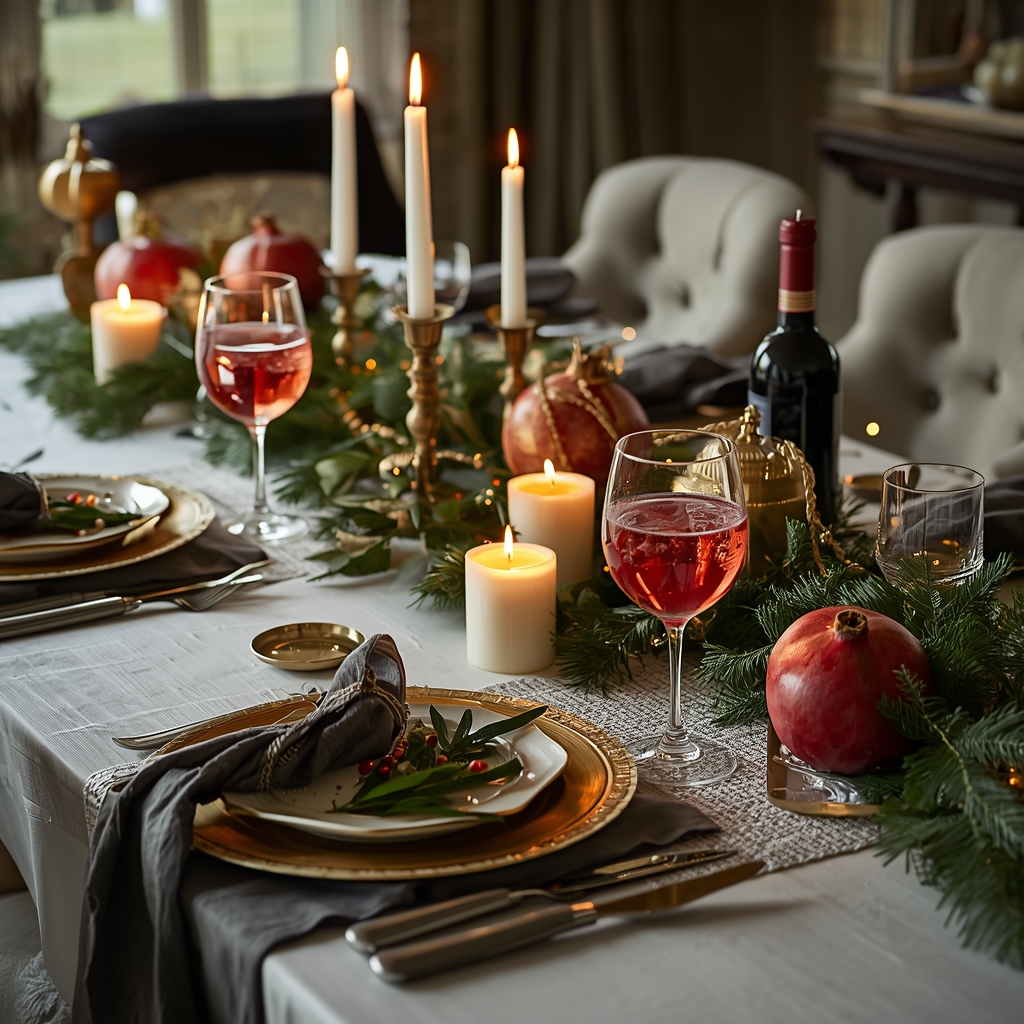
For presentation, minimal investment in table decoration creates an outsized visual impact. Rosemary branches, sliced blood orange rounds, fresh cranberries, and small white candles scattered across the table reflect the flavors of the menu and create an atmosphere that feels intentional and beautiful. The visual coherence between the food and the table decoration elevates the entire experience.
On portion sizes, serve the appetizer and main course in moderate portions that allow guests to taste everything without feeling obligated to eat past comfort. Offer seconds of the roasted vegetables generously — they are the dish guests can eat freely. For the dessert, the individual panna cotta portions in glasses regulate themselves naturally.
Finally, build in moments of rest during the evening — a 20–30 minute pause between the appetizer and main course allows digestion to proceed comfortably and creates space for genuine conversation. This unhurried pace is itself a form of wellness practice, one that transforms a meal into an experience worth remembering as the new year begins. Visit our romantic cuisine collection for more ideas on creating memorable meals for special occasions.