

Healthy Grilled Lobster with Fresh Herbs and Lemon
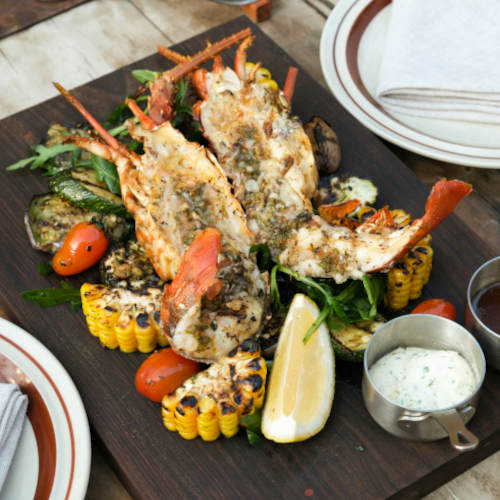
There is an enduring culinary truth that the finest ingredients require the simplest preparation. Grilled lobster with fresh herbs and lemon is the perfect embodiment of this principle. By halving the lobster, brushing it with a fragrant herb-infused oil, and placing it on a hot grill, you create a dish of extraordinary depth with minimal intervention — preserving every nuance of lobster’s naturally sweet, delicate flavor while adding the aromatic complexity of herbs and the brightness of lemon. This recipe is a cornerstone of our healthy recipes collection and one of the most nutritionally complete ways to prepare lobster.
Unlike preparations that drown lobster in butter or heavy cream sauces, this grilled version lets the seafood speak for itself. The high heat of the grill caramelizes the natural sugars in the shell, creating subtle smoky notes that elevate the inherent sweetness of the meat. A light drizzle of extra-virgin olive oil infused with garlic, thyme, rosemary, and lemon keeps the flesh moist without adding unnecessary calories or saturated fat.
This recipe yields two generous servings — ideal for an intimate dinner, a romantic evening meal, or a weekend lunch that feels genuinely celebratory without requiring hours in the kitchen. Total active time is approximately 30 minutes, including prep.
The Nutritional Case for Grilled Lobster
Grilling is widely considered one of the healthiest cooking methods for proteins. It requires no added fats to prevent sticking, allows excess moisture to evaporate for a concentrated flavor, and creates a beautiful caramelized exterior through the Maillard reaction without any breading or batter. For lobster specifically, grilling preserves its remarkable nutritional profile virtually intact.
Lobster’s nutritional credentials are exceptional: approximately 19 to 21 grams of complete protein per 100g of meat, fewer than 100 calories, and less than 1 gram of fat. It is rich in vitamin B12, selenium, zinc, copper, and phosphorus. The iodine content is particularly significant — iodine is essential for thyroid function and metabolic regulation, and lobster provides a meaningful contribution to daily requirements.
The herb-infused olive oil used in this recipe adds a meaningful dose of monounsaturated fats from the olive oil, along with the phytochemical benefits of fresh herbs. According to Harvard T.H. Chan School of Public Health, replacing saturated fats with monounsaturated fats from sources like olive oil is consistently associated with reduced cardiovascular risk. This recipe achieves precisely that substitution — maximum flavor from herbs and olive oil rather than butter.
Fresh thyme, rosemary, and flat-leaf parsley each contribute their own array of antioxidant polyphenols. Thyme contains thymol and carvacrol, compounds with antimicrobial and antioxidant properties. Rosemary is rich in rosmarinic acid, a potent anti-inflammatory. Parsley provides vitamin K, vitamin C, and folate in surprising concentrations for an herb used in tablespoon quantities. Together, they transform a simple grilling oil into a genuinely functional condiment.
Selecting and Preparing Your Lobster
The quality of grilled lobster depends enormously on starting with a well-chosen specimen. For this recipe, live lobster is strongly preferred over pre-cooked. Grilling a previously boiled lobster risks overcooking and results in drier, less flavorful meat. If live lobster is unavailable, raw frozen lobster tails (not pre-cooked) are the best substitute — they grill beautifully and remain widely available year-round.
When selecting live lobsters, look for active movement — a lively lobster is a fresh lobster. The shell should be intact and firm, with no unpleasant odor. For this two-serving recipe, either two medium lobsters of approximately 500g each or two substantial lobster tails work equally well.
The most humane and practical way to prepare a live lobster for grilling is to chill it in the freezer for 15 minutes before halving. This renders the lobster insensible before splitting. Place the lobster on a stable cutting board, position a sharp heavy knife at the cross mark on the head, and cut firmly through the head first, then through the tail in one decisive motion. Remove the stomach sac (a small gray pouch in the head) and the intestinal tract (the thin dark line running through the tail). Leave the coral (orange roe, if present) and tomalley (green liver) — both are edible and flavorful, though some prefer to remove the tomalley.

Ingredients
For 2 servings:
- 2 live lobsters, approximately 500g each (or 2 large raw lobster tails, 200–250g each)
- 3 tablespoons extra-virgin olive oil
- 3 garlic cloves, finely minced or grated
- 2 tablespoons fresh thyme leaves (from approximately 6 sprigs)
- 1 tablespoon fresh rosemary, very finely chopped
- 3 tablespoons flat-leaf parsley, finely chopped (divided: 2 for marinade, 1 for finishing)
- Zest and juice of 1 large organic lemon
- 1/2 teaspoon sweet smoked paprika (optional — adds subtle depth without heat)
- Sea salt and freshly ground black pepper
- 1 lemon, cut into wedges, for serving
- Optional: small handful of fresh watercress or arugula as a light side
Preparation
Step-by-step instructions:
- Prepare the herb oil: Combine the olive oil, minced garlic, thyme, rosemary, 2 tablespoons of the parsley, lemon zest, and smoked paprika (if using) in a small bowl. Stir well and season with sea salt and black pepper. Allow the mixture to infuse for at least 10 minutes while you prepare the lobster — this brief resting time allows the garlic and herbs to release their aromatic compounds into the oil.
- Chill and halve the lobster: Place live lobsters in the freezer for 15 minutes. Place each chilled lobster flat side down on a stable cutting board. Position a sharp, heavy knife at the cross mark on the top of the head. With one firm, decisive downward motion, cut through the head first, then rotate the lobster 180° and cut through the tail. Open the two halves flat.
- Clean the lobster: Remove and discard the small gray stomach sac from the head cavity and the thin dark intestinal line running along the tail meat. Rinse briefly under cold water and pat very dry with paper towels. Dry flesh grills far better than wet flesh.
- Brush generously with herb oil: Using a pastry brush or spoon, coat the entire cut surface of each lobster half — meat, cavity, and any exposed shell edges — with a generous layer of the herb oil. Reserve approximately one third of the oil for basting during grilling.
- Preheat the grill: Heat a grill or grill pan to high heat (approximately 230°C / 450°F). For a charcoal grill, wait until the coals are white-hot with a visible glow. Brush the grill grates lightly with a neutral oil to prevent sticking.
- Grill flesh-side down first: Place the lobster halves flesh-side down on the hot grill. Cook for 4 to 5 minutes without moving. This is the critical step that creates caramelized grill marks and develops the characteristic smoky sweetness of grilled lobster. Do not press down or move the lobster during this stage.
- Flip and finish: Carefully flip the lobster halves shell-side down. Baste the flesh generously with the remaining herb oil. Cook for a further 3 to 5 minutes, until the meat is opaque, just firm to the touch, and has pulled slightly away from the shell edges. Avoid overcooking — properly grilled lobster is cooked through but still tender and slightly translucent at the very center.
- Rest and garnish: Transfer the grilled lobster halves to a warm serving platter. Scatter the remaining tablespoon of fresh parsley over the surface, squeeze a wedge of fresh lemon juice directly over the meat, and serve immediately with additional lemon wedges alongside.
Total time: 30 minutes
Nutritional Breakdown Per Serving
This preparation is one of the lowest-calorie ways to enjoy lobster while maximizing flavor. Each serving provides approximately 320 to 360 calories — significantly less than cream or butter-based lobster preparations that can exceed 600 calories per serving.
Protein content is substantial at approximately 35 to 40 grams per serving, reflecting the two lobster halves per person. This high-quality complete protein contains all nine essential amino acids in proportions that support muscle maintenance, tissue repair, and immune function. Research consistently shows that high-protein seafood meals provide superior satiety compared to equivalent calorie meals from refined carbohydrates.
The fat content — approximately 12 to 14 grams per serving — comes primarily from the olive oil in the herb basting mixture. This is predominantly monounsaturated oleic acid, the fatty acid most associated with Mediterranean diet health benefits. According to the Mayo Clinic, the Mediterranean dietary pattern — centered on olive oil, lean proteins, and fresh vegetables — is among the most evidence-supported dietary approaches for long-term cardiovascular health.
Carbohydrate content is minimal at approximately 3 to 5 grams per serving, making this recipe highly compatible with ketogenic, low-carb, paleo, and anti-inflammatory dietary approaches. The glycemic load is negligible.
Timing, Doneness, and Common Mistakes
The most common error in grilling lobster is overcooking. Unlike beef or chicken where internal temperature safety margins are wide, lobster has a narrow window between perfectly cooked and disappointingly dry. The meat should be opaque throughout but still slightly pliant when pressed gently. If the meat has shrunk significantly and pulls away from the shell by more than 5mm, it is overcooked.
A reliable doneness check: insert a thin knife or skewer into the thickest part of the tail meat. It should meet minimal resistance and the probe should feel warm (not hot) when touched to your inner wrist. The shell should be bright red throughout — any remaining dark orange or brown sections indicate undercooking.
Temperature is the other critical variable. A grill that is not hot enough will steam the lobster rather than sear it, producing soft, pale flesh without the caramelized exterior that defines grilled lobster. High heat and confidence are your greatest allies here.
For indoor cooking without a grill, this recipe adapts well to a very hot cast iron grill pan or oven broiler. For the oven broiler method, place the herb-oiled lobster halves flesh-side up under a preheated broiler at maximum temperature (approximately 240°C) for 8 to 10 minutes, basting once halfway through. The result is excellent though without the characteristic grill marks.
Serving Suggestions and Pairings
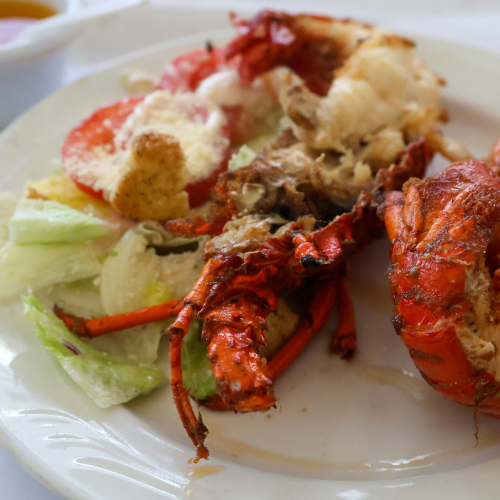
Grilled lobster with herbs and lemon is a complete protein-forward main course that pairs beautifully with light sides that complement rather than compete. The goal is to let the lobster remain the undisputed star.
A simple green salad of arugula, watercress, and shaved fennel with a light lemon vinaigrette echoes the citrus notes in the herb oil and adds refreshing crunch. Grilled or roasted asparagus with a squeeze of lemon provides an elegant, seasonal accompaniment. For a more substantial meal, a small portion of herbed cauliflower rice or a light tomato and cucumber salad complete the plate without overwhelming the lobster’s delicacy.
Crusty sourdough bread or a slice of grilled whole-grain bread alongside allows you to appreciate the exceptional cooking juices that pool in the shell cavities — flavored with herb oil, lobster’s own juices, and lemon.
This dish integrates beautifully into a romantic dinner menu. Explore our romantic cuisine collection for complementary starter and dessert ideas that create a complete evening menu. For more light and health-focused seafood ideas, our collection of wellness recipes offers numerous options across every course. You can also find broader guidance on building balanced, protein-forward meal plans in our wellness practices section.
Frequently Asked Questions
Can I grill lobster tails instead of whole lobsters? Absolutely — raw lobster tails are an excellent choice for this recipe. Cut them lengthwise with kitchen shears along the underside, open the shell to expose the meat, brush generously with herb oil, and grill shell-side down for 5 to 7 minutes, then flesh-side down for 2 to 3 minutes. The result is exceptional.
How do I prevent the lobster from sticking to the grill? Three things prevent sticking: a very hot grill (the flesh releases naturally once properly seared), a well-oiled grate, and patience — never try to move the lobster before it has had a chance to sear. If it feels stuck, wait another 30 seconds before trying to turn.
Can this recipe be made ahead? The herb oil can be prepared up to 24 hours in advance and refrigerated. The lobster itself must be cooked just before serving — reheated grilled lobster loses much of its texture and flavor. If necessary, the lobster can be grilled up to 30 minutes in advance and served at room temperature, which works beautifully in warm weather.
Is this recipe suitable for a barbecue with guests? Yes, but grill one or two halves at a time to maintain consistent high heat. A crowded grill surface lowers temperature and leads to steaming rather than searing. If cooking for four or more, use the highest heat setting and work in batches, keeping cooked lobster in a warm oven (60°C) while you grill the remaining portions.
This grilled lobster recipe proves that the most nourishing food is often the most beautiful. Browse our full recipes for more ideas that honor great ingredients with intelligent, health-focused preparation.
Lobster and the Mediterranean Dietary Philosophy
This grilled lobster recipe embodies the Mediterranean dietary philosophy in its purest form: premium-quality protein prepared with minimal intervention, enriched with fresh herbs, finished with extra-virgin olive oil, and served with seasonal vegetable accompaniments. This approach — which nutritional researchers have studied extensively for decades — consistently produces better health outcomes than virtually any other dietary pattern examined at a population scale.
The Mediterranean diet’s benefits extend far beyond cardiovascular protection, though that alone is substantial. Research published by the Mayo Clinic and numerous European research institutions has demonstrated associations with reduced risk of type 2 diabetes, improved cognitive function and reduced dementia risk, lower rates of certain cancers, better mental health outcomes, and greater longevity. The mechanism linking seafood specifically to these outcomes includes omega-3 fatty acids, anti-inflammatory nutrient profiles, and the displacement of saturated fat-rich animal proteins from the diet.
Lobster fits this dietary pattern exceptionally well. Its near-zero saturated fat content, complete protein profile, and rich micronutrient density make it a genuinely therapeutic food when consumed as part of a varied diet. The grilling technique used in this recipe minimizes added fats while maximizing flavor development — a combination that allows lobster’s inherent nutritional value to shine without dilution.
The herb oil in this recipe also deserves consideration as a functional component. Fresh thyme, rosemary, and parsley each contain documented bioactive compounds. Rosemary’s rosmarinic acid has been shown in cell studies to have neuroprotective and anti-inflammatory properties. Thyme’s essential oils have demonstrated antimicrobial activity in laboratory settings. These are not health claims about this dish specifically — but they illustrate that a thoughtfully composed herb oil is genuinely more than a flavoring agent.
Grilling Techniques Across Cultures: A Broader Context
Grilling over direct heat is one of humanity’s oldest cooking techniques, predating recorded history by many thousands of years. Every coastal culture with access to shellfish and crustaceans has developed its own tradition of cooking them over fire — from the paella-adjacent arroces a la leña of coastal Spain to the elaborate barbecued lobster traditions of New England’s summer celebrations, to the Japanese preparation of ise ebi (Japanese spiny lobster) grilled over charcoal at seaside restaurants.
What these traditions share is an intuitive understanding that high heat applied directly to a premium protein produces flavors that cannot be achieved any other way. The Maillard reaction — the cascade of chemical reactions between amino acids and reducing sugars that produces hundreds of new flavor compounds — occurs at temperatures above 140°C and is responsible for the brown crust, complex aromas, and deepened sweetness of properly grilled lobster. This is not merely caramelization (which involves sugars alone) but a more complex transformation that creates flavor molecules found nowhere else in cooking.
Understanding this chemistry makes better cooks. When you know that Maillard browning requires both high heat and dry surface conditions, you understand why the lobster must be patted completely dry before grilling, why the grill must be screaming hot before the lobster touches it, and why patience — resisting the urge to move the lobster before it has had time to develop its crust — produces dramatically better results than anxious intervention.
This grilled lobster recipe is one of the most satisfying in our healthy recipes collection precisely because it rewards this kind of informed, attentive cooking. The technique is simple; the result is extraordinary. Browse our full range of wellness-focused recipes for more dishes that honor great ingredients with equally great technique.